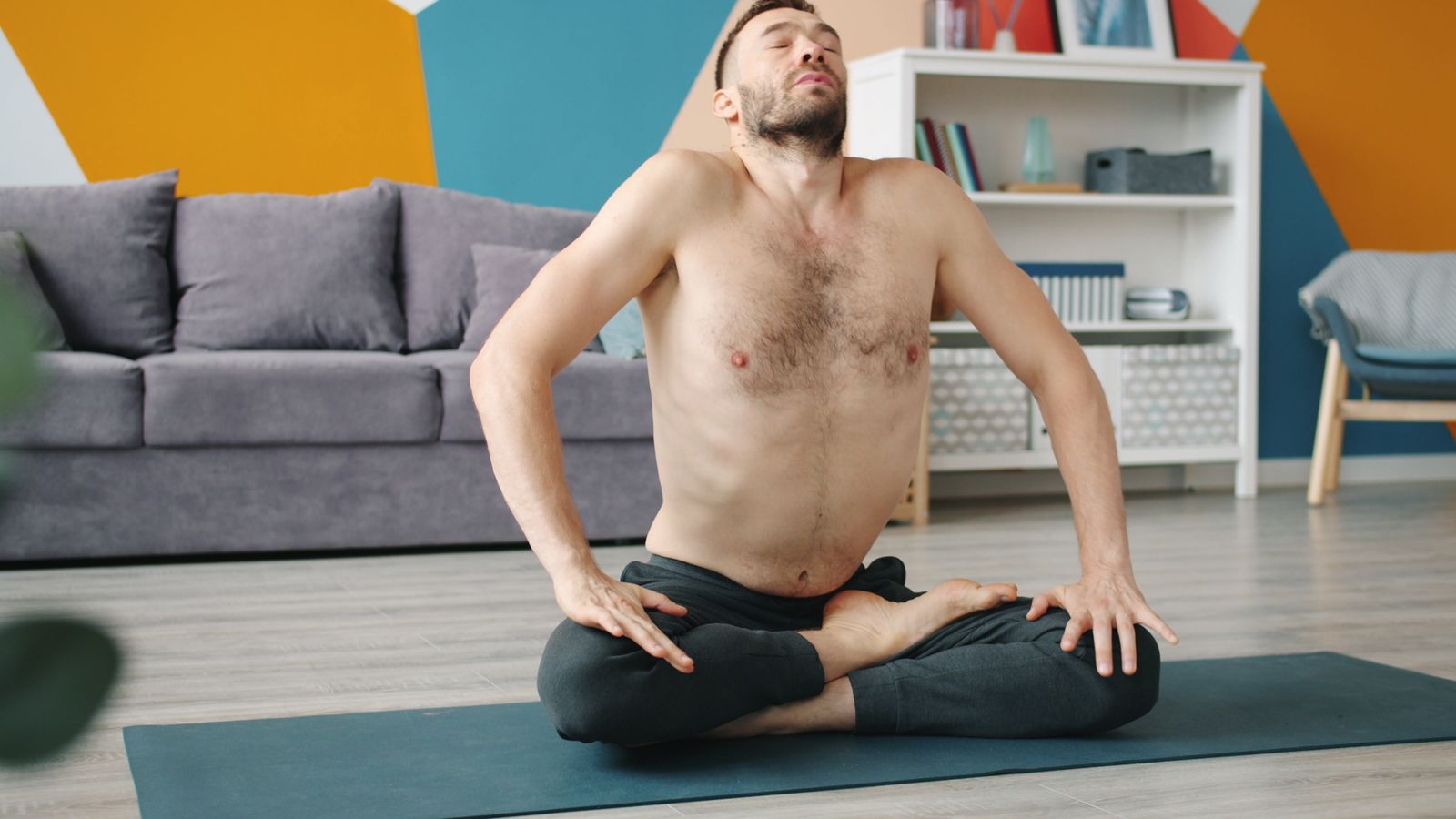
Plenty of men assume yoga is not for them because they cannot touch their toes. That gets it backwards. Yoga is one of the simplest ways to work on the things most men neglect: mobility, balance, breathing and the ability to sit, squat and turn without stiffness. You do not need to be flexible to start. You become more flexible by doing it.
This guide skips the mysticism and the marketing. It covers what yoga actually involves, which styles suit a beginner, what to expect in a first class, what gear you need (very little) and how to make it a habit.

What yoga is, in practical terms
Yoga began in ancient India as a broader spiritual and philosophical discipline. Most modern classes in the US focus on the physical side: a series of postures (often called poses or asanas), coordinated with steady breathing, usually finishing with a few minutes of lying still.
For a beginner, the useful way to think about it is as structured movement practice. A typical session moves your hips, spine and shoulders through ranges they rarely reach in daily life, builds strength in positions you hold with your own body weight, and trains you to breathe calmly while working. Some classes include meditation or chanting; many do not. You can take what helps and leave the rest.
Why it is worth a man’s time
- Mobility for everyday life. Long hours sitting tighten the hips and hamstrings and round the upper back. Regular yoga works directly against that pattern.
- Strength without equipment. Holding a plank, a lunge or a downward-facing dog for several breaths is real work for the shoulders, core and legs.
- Balance and body control. Standing poses train the small stabilizing muscles around the ankles, knees and hips, which matters more with every passing decade.
- A calmer baseline. Slow, controlled breathing under mild effort is a skill. Many people find it carries over to stressful moments at work.
- A complement to other training. Lifters, runners and cyclists often use yoga to balance out the repetitive patterns of their main sport.
Choosing a style
Class names vary from studio to studio, so read the description, not just the label. These are the styles you will see most often.
| Style | Pace | What to expect | Good for beginners? |
|---|---|---|---|
| Hatha | Slow to moderate | Poses held for several breaths with rest between them; often used as a general label for foundational classes | Yes, a good first choice |
| Vinyasa / Flow | Moderate to fast | Poses linked together in a continuous sequence timed to the breath | Yes, if the class is marked beginner or level 1 |
| Yin | Very slow | Mostly seated or lying poses held for several minutes to target hips and lower back | Yes, especially if you are stiff |
| Restorative | Very slow | Supported poses using bolsters and blocks; more rest than effort | Yes, for recovery days |
| Power yoga | Fast | Athletic, vinyasa-based classes with a strength focus | Better after a few weeks |
| Ashtanga | Moderate to fast | A set sequence practiced the same way each time; demanding | Better after a few weeks |
| Hot yoga | Varies | Classes in a heated room; sweaty and tiring | Wait until you know the basics, and hydrate well |
If you are unsure, start with a class labeled “beginner,” “foundations,” “level 1” or “gentle.” Those classes slow down, explain alignment and show easier versions of each pose.
Your first class: what to expect
Before you go
Arrive 10 to 15 minutes early, especially for a first visit. You may need to fill in a short form. Tell the instructor you are new and mention any injuries or problem areas, such as a bad knee or lower back. A good teacher will offer alternatives during class.
Eat lightly beforehand. A big meal an hour before a class full of forward folds and twists is a mistake you will only make once.
During class
Most classes follow a similar arc: a few minutes of breathing or gentle movement, a warm-up, standing poses, some floor work, and a final rest lying on your back (often called savasana). Expect 45 to 75 minutes in total.
- Watch, then follow. Set up your mat where you can see the instructor. It is fine to glance at others for cues.
- Use the easier option. Bending your knees in forward folds or putting a knee down in a plank is not cheating. It keeps the work in the right muscles.
- Breathe through the nose if you can. If you are holding your breath or gasping, back off.
- Discomfort is fine; pain is not. A strong stretch is expected. Sharp, pinching or joint pain means stop and adjust.
- Stay for the final rest. Leaving early during savasana is the one piece of studio etiquette people notice.
Studio etiquette
Silence your phone, remove your shoes at the entrance, keep your mat area tidy and wipe down any shared props when you return them. Most studios ask you not to walk across other people’s mats.
What you actually need
Very little. Wear clothes you can move in that will not ride up when you bend over: fitted shorts or joggers and a T-shirt that is not too loose. You practice barefoot.
A mat is the only real purchase. Studios usually rent or lend them, so try a few before buying. When you do buy, look for a mat that does not slide on the floor, has enough cushioning for your knees (around 4 to 6 mm is common) and does not shed or smell strongly of chemicals. Blocks and a strap are useful but optional; studios provide them.
Studio, video or app?
A studio class is the best start for most people because a teacher can spot and correct problems you cannot see. After a few weeks of classes, home practice with videos or an app becomes much more useful because you understand the cues. Many men end up with a mix: one class a week and one or two short sessions at home. If you are setting up space for training at home, the same principles in our guide to building a home gym with equipment that lasts apply: buy little, buy well and make it easy to use.

Making it a habit
The benefits of yoga come from regularity, not intensity. Two or three sessions a week for a couple of months will do more than one heroic class a month.
- Book it like a meeting. Pick fixed days and times and put them in your calendar.
- Start short at home. Ten to twenty minutes counts. A short session you actually do beats a long one you skip.
- Track simple markers. Note how far you can fold forward or how long you can hold a pose. Progress is slow but visible.
- Bring a training partner. It is much harder to skip a class someone else is waiting for.
From experience: The best fitness advice I can give is to work out with a friend. A friend keeps you accountable, and that matters more than the perfect plan. Yoga is no different: book the class with someone and you will both show up.
For more on staying consistent, see workout consistency and the modern gentleman. If you are over 40, our exercise tips for men over 40 pair well with a gentle weekly yoga session.
Common beginner mistakes
- Forcing the stretch. Pushing hard into a pose to match the person next to you is the quickest way to strain something.
- Locking the joints. Keep a slight bend in the knees and elbows when you are bearing weight.
- Starting with the hardest class. A hot power class on day one tends to leave people sore and discouraged.
- Ignoring the breath. If your breath is ragged, the pose is too hard for now.
- Quitting after one class. The first session is the most awkward. The third feels very different.
Quick-start checklist
- Pick a beginner, foundations or gentle class within easy reach of home or work.
- Arrive early and tell the teacher you are new and about any injuries.
- Wear fitted clothes; borrow a mat the first few times.
- Take the easier version of each pose and keep breathing.
- Commit to two sessions a week for eight weeks before judging the results.
FAQ
Do I need to be flexible to start yoga?
No. Flexibility is a result of practice, not a requirement. Beginner classes show easier versions of each pose, and props such as blocks bring the floor closer to you.
How often should a beginner do yoga?
Two or three times a week is a sensible starting point. Short, regular sessions build mobility more reliably than occasional long ones.
Is yoga enough exercise on its own?
Yoga builds mobility, balance and some strength. Most men will still benefit from regular cardio and progressive strength training alongside it; yoga works well as a complement.
Can yoga help with back stiffness?
Many people find gentle, regular movement eases everyday stiffness. If you have back pain, an injury or a medical condition, check with a doctor or physical therapist before starting and tell your instructor.
This article is general information, not medical advice. Talk to a qualified health professional before starting a new exercise program, especially if you have an injury or health condition.
Updated November 2026. Some links on this site may be affiliate links; see our editorial policy.