A home gym can pay for itself within a few years compared with a membership, and it removes the commute that so often becomes the excuse to skip a session. But home gym equipment varies enormously in quality. Some will be wobbling and rusting within a year; some will still be solid when you’re twenty years older. The difference is mostly in a few details you can check before you buy.
This guide covers which pieces give you the most training for the space and money, what separates durable equipment from disposable equipment, and how to set up and maintain it so it lasts.

General information, not medical advice. If you have an injury or health condition, check with a doctor or qualified trainer before starting a new training program.
Start with the core: what you actually need
Most strength training can be done with a short list of equipment. Before buying anything, decide what kind of training you’ll do. For general strength and fitness, this core covers almost everything:
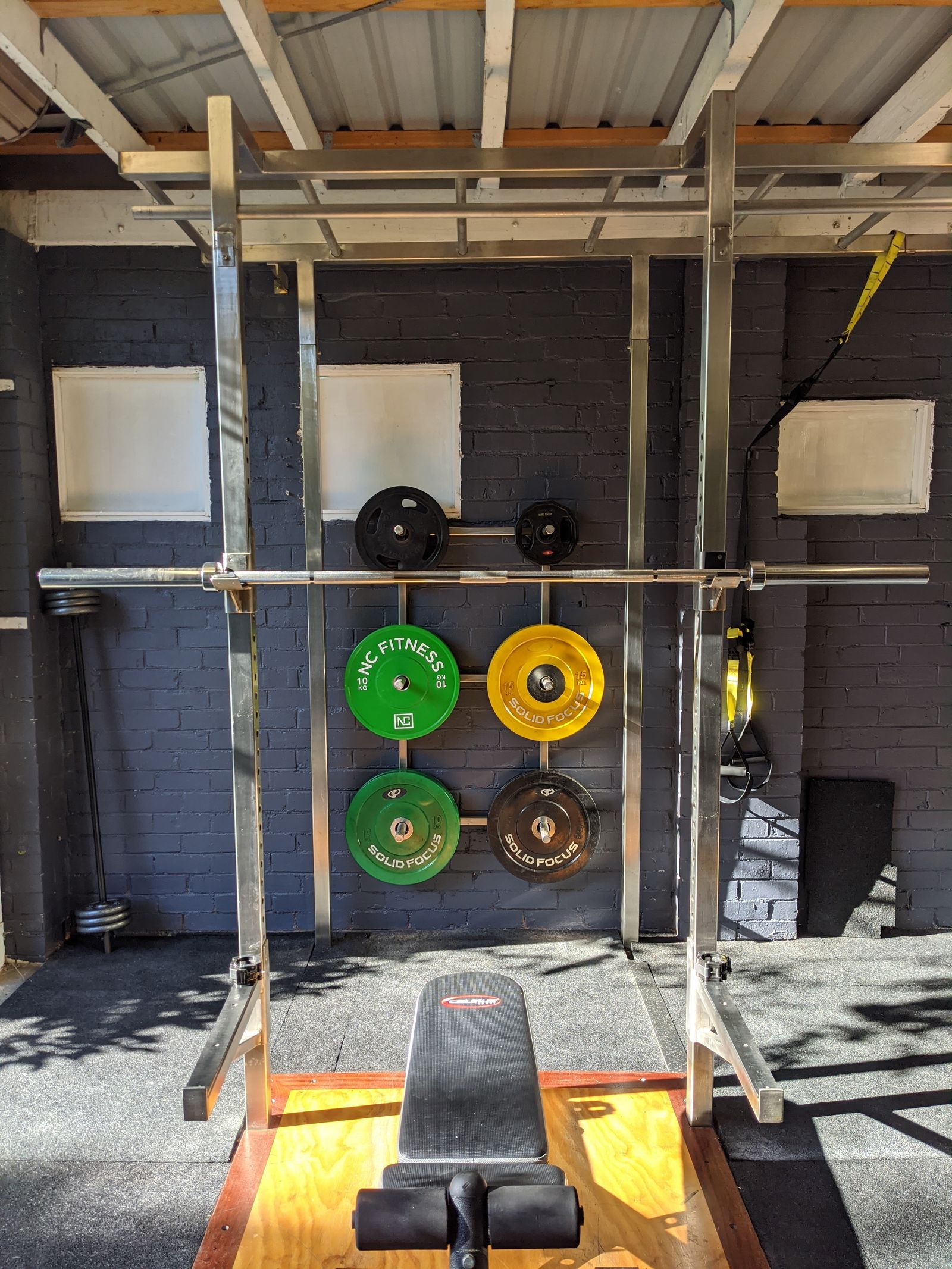
- A power rack or squat stand: lets you squat, bench press and do pull-ups safely, with safety arms to catch the bar.
- A barbell: the most versatile piece of equipment you can own.
- Weight plates: enough to grow into, bought gradually.
- An adjustable bench: flat and incline pressing, rows and many dumbbell exercises.
- Dumbbells or adjustable dumbbells: for accessory work and exercises that don’t suit a barbell.
- Flooring: protects the floor, the equipment and your joints.
If space or budget is tight, a set of adjustable dumbbells, a solid bench and a doorway pull-up bar go a long way. Our guide to dumbbell exercises with an adjustable bench shows how much you can do with just those.
What makes equipment last
Good home gym equipment is mostly simple steel, and simple steel can last for decades. What you’re checking for is thickness, welds, finish and moving parts.
Racks: steel thickness and stability
Rack steel is often described by gauge; a lower number means thicker steel. Many well-regarded home racks use 11-gauge steel, while lighter-duty racks use thinner steel. Also check the stated weight capacity, the upright size and hole spacing, whether the rack can be bolted down or has a stable base, and whether replacement parts and attachments are sold separately.
Barbells: sleeves, knurling and finish
A standard men’s Olympic barbell weighs 20 kg (about 45 lb) and has 2-inch sleeves that fit Olympic plates. Look for sleeves that spin smoothly on bushings or bearings, a clearly stated tensile strength from the maker, and a corrosion-resistant finish such as stainless steel, cerakote or a quality zinc or chrome coating. Bare steel feels good in the hand but rusts more easily in damp garages.
Plates: accuracy and material
Cast iron plates are durable and affordable. Bumper plates, made of rubber, can be dropped from overhead, which matters if you do Olympic lifts. Check that weights are accurately calibrated and that the center hole fits snugly.
Benches: stability and adjustment
A good bench doesn’t wobble, has a firm pad, and locks securely at each angle. Check the weight capacity, the gap between the seat and back pad, and whether the adjustment mechanism is metal rather than plastic.
| Feature | Budget equipment | Long-lasting equipment |
|---|---|---|
| Rack steel | Thin tubing, small bolts | Thicker steel, solid welds, heavy hardware |
| Barbell sleeves | Rough or loose spin | Smooth, consistent spin |
| Finish | Thin paint that chips | Powder coat or corrosion-resistant coating |
| Bench adjustment | Plastic pins and wobble | Metal pins, stable at every angle |
| Support | No spare parts | Parts and attachments sold separately |
Well-known brands and where to look
Brands such as Rogue, REP Fitness and Titan Fitness are widely used for home racks, bars and benches, and Concept2 is a common choice for rowing machines. Each makes equipment at different price points, so compare the specific product rather than the brand name. Used equipment is also worth considering: steel racks, plates and dumbbells hold up well, and many people sell barely used gear. Inspect for rust, cracked welds and bent parts before you buy.
For smaller items like belts, gloves and bags, see our guide to gym essentials for men.

Setting up your space
- Measure ceiling height. Allow room for overhead pressing and pull-ups, and check the rack’s height before ordering.
- Measure floor space. A barbell is about seven feet long, so you need clearance on both sides of the rack.
- Lay proper flooring. Thick rubber mats, such as horse stall mats, are a common and durable choice for garages and basements.
- Control moisture. Damp air rusts steel. A dehumidifier helps in basements and garages.
- Store plates and bars properly. Use plate storage and a bar holder instead of leaving everything on the floor.
Maintenance that adds years
- Brush chalk and sweat off the barbell knurling regularly, and apply a light coat of oil to bare steel.
- Check and tighten rack and bench bolts every few months.
- Wipe down pads and keep them out of direct sunlight to prevent cracking.
- Look for rust spots early and treat them before they spread.
- Store adjustable dumbbells and cardio equipment according to the maker’s instructions.
Equipment is only half the battle
The biggest risk to a home gym isn’t rust. It’s not using it. A garage full of equipment does nothing if motivation fades after the first month. Set a regular schedule, keep a simple training log, and make the space somewhere you actually want to be.
From experience: The best fitness advice I can give is to work out with a friend. A training partner keeps you accountable on the days you’d rather skip, and that matters more than any piece of equipment. A home gym is a great place to train together.
Buying equipment once and using it for decades is the same thinking behind our buy it for life philosophy: fewer purchases, better made, well maintained.
Key takeaways
- Start with a rack, barbell, plates, bench and flooring, or adjustable dumbbells if space is tight.
- Check steel thickness, welds, finish and the quality of moving parts.
- Measure ceiling height and floor space before buying.
- Control moisture and do basic maintenance to prevent rust.
- Consistency matters more than equipment; a training partner helps.
FAQ
How much space does a home gym need?
A rack-based setup usually needs a footprint large enough for the rack plus clearance for a seven-foot barbell on both sides. A dumbbell-and-bench setup can fit in a much smaller area.
Is used gym equipment a good idea?
Often, yes. Steel racks, plates and dumbbells are hard to wear out. Inspect for rust, cracks and bent parts, and avoid equipment with damaged welds.
Should I buy bumper plates or iron plates?
Iron plates are cheaper and take less space. Bumper plates are better if you’ll drop the bar from overhead, such as in Olympic lifts, and they’re gentler on floors.
Updated October 2026. Some links on this site may be affiliate links; see our editorial policy.