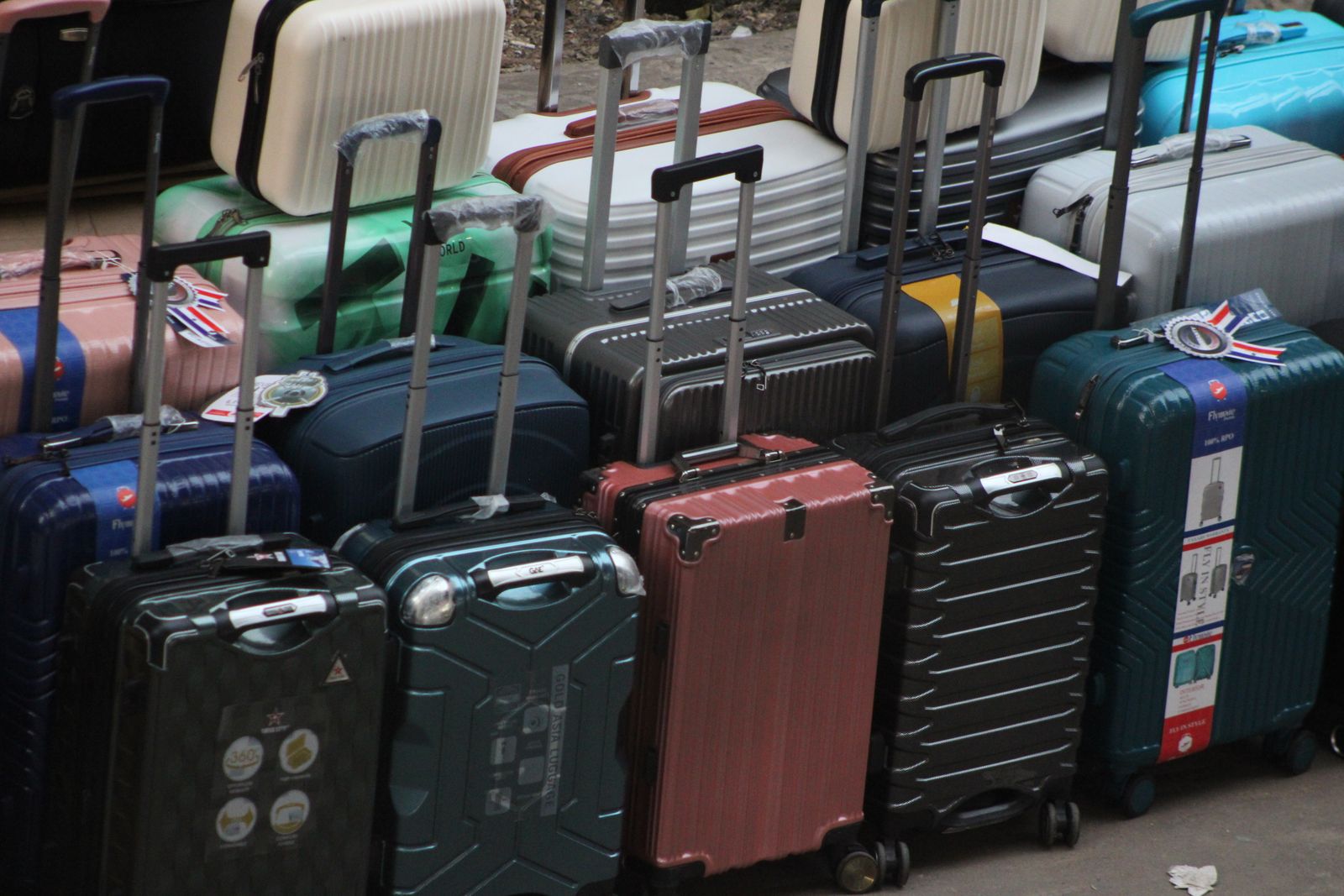
Checked bags have a hard life. They’re dropped, stacked under heavier cases, dragged over conveyors and pushed through tight spaces, sometimes several times on one trip. A suitcase that looks great in a shop can come back with a cracked shell, a jammed handle or a wheel that no longer turns.
The good news is that durability is mostly predictable. The shell or fabric, the zippers, the wheels and the handle each fail in recognizable ways, and you can check all of them before you buy. This guide explains how the common luggage materials behave, what the weak points are, and what to look for in a bag you want to keep for years.

Hard-shell materials
Polycarbonate
Polycarbonate is the most common material in good hard-shell luggage. Its strength is that it flexes under impact and springs back rather than cracking. The downsides are that it scuffs and scratches easily, especially in glossy finishes, and that cheap polycarbonate blends can be thin. A textured or matte finish hides scuffs better than a high-gloss one.
ABS
ABS plastic is lighter and less expensive than polycarbonate, which is why it’s common in budget luggage. It’s also stiffer and more prone to cracking under a hard impact, particularly in cold weather. Some cases use an ABS and polycarbonate blend; read the description carefully, because “polycarbonate blend” can mean mostly ABS.
Polypropylene
Polypropylene is light and resists impact reasonably well. It’s used by several mid-range and premium brands. Quality varies a lot with thickness and construction, so judge the specific case rather than the material name.
Aluminum
Aluminum cases are rigid and very protective, which is why photographers and frequent travelers like them. They dent rather than crack, and many owners see the dents as character. They’re heavier than plastic shells and cost more. They also usually close with latches rather than zippers, which removes one common failure point.
Soft-sided materials
Ballistic nylon
Ballistic nylon is a dense, heavy-weave nylon originally developed for military protective gear. It’s highly resistant to abrasion and tearing, which makes it a strong choice for checked bags that will be dragged and stacked. It’s heavier than lighter nylons and can look utilitarian.
Cordura and other high-denier nylons
Cordura is a brand name for a family of durable nylon fabrics. Many quality soft-sided bags use it or similar high-denier nylon. Denier describes the thickness of the fibers, not strength on its own: a well-made 840-denier fabric can outperform a poorly made heavier one. Look for tight, even weaving and a coated or treated interior.
Polyester
Polyester is common in inexpensive soft luggage. It’s light and cheap, but generally less abrasion-resistant than nylon of similar weight. It can be fine for occasional trips, but it’s not the material to choose if you check bags often.
Leather and waxed canvas
Leather and waxed canvas look excellent and age well, but they’re heavy and need care. They’re better suited to carry-on bags, weekenders and car trips than to regular checked baggage.
Comparison at a glance
| Material | Main strength | Main weakness | Best for |
|---|---|---|---|
| Polycarbonate | Flexes and rebounds from impacts | Scratches and scuffs | Frequent checked travel |
| ABS | Light and inexpensive | Can crack under hard impact | Occasional travel on a budget |
| Polypropylene | Light, decent impact resistance | Quality varies widely | Mid-range checked bags |
| Aluminum | Very rigid and protective | Heavy, dents, costly | Fragile contents, long service life |
| Ballistic nylon | Excellent abrasion and tear resistance | Heavier than other fabrics | Hard-use checked bags |
| High-denier nylon (e.g. Cordura) | Tough, light, expandable | Can stain; quality varies | Versatile checked or carry-on bags |
| Polyester | Light and cheap | Wears faster | Light, infrequent use |
The parts that fail first
In practice, suitcases rarely die because the shell gives out. They die because a wheel breaks, the telescoping handle jams, or a zipper splits. Check these closely.
Wheels
- Inline (two-wheel) designs usually have larger wheels recessed into the body, which protects them from impact.
- Spinner (four-wheel) designs are easier to maneuver in airports but the exposed wheels take more abuse.
- Look for wheels that can be replaced with basic tools. Screwed-in wheel housings are easier to repair than riveted ones.
Zippers
Large, heavy-gauge zippers last longer than fine ones. YKK is a widely used, well-regarded zipper maker, and its name is usually stamped on the pull. Check that the zipper runs smoothly around corners, since corners are where splits often start.
Handles and frame
Extend and retract the telescoping handle several times in the store. It should lock firmly at each height without wobbling. Carry handles should be attached at reinforced points, ideally on the top and the side, so the bag can be lifted either way.
From experience: For over 20 years I’ve helped people find quality branded clothing and outfitter goods, and one thing I’ve noticed in that time is that many brands share the same manufacturers. High-end branded goods are often made by the same people who make discount goods. That’s why I’d rather judge a suitcase by its wheels, zippers, handle and warranty than by the logo on the front.
Warranty and repairability
A strong warranty is one of the clearest signals of how confident a maker is in its product. Read the terms rather than the headline: some warranties cover airline damage, while others cover only manufacturing defects. Check whether the brand sells replacement wheels, handles and zipper pulls, and whether there are authorized repair centers. A repairable bag can last far longer than one that’s thrown away when a single wheel cracks.
For a broader look at how to assess build quality in any product, see how to judge quality before you buy anything. If you want to choose a single bag for the long haul, read the one suitcase worth buying for life.
How to make any suitcase last longer
- Don’t overpack. Strained zippers and bulging shells fail sooner.
- Use luggage straps sparingly on soft bags; they can help keep a full bag closed.
- Wipe down and dry the bag after wet trips, especially leather or canvas trim.
- Store it empty and dry, out of direct sunlight, which can weaken plastics over time.
- Report damage to the airline before you leave the airport. Most carriers have time limits for claims.
Key takeaways
- Polycarbonate and aluminum are the most durable hard-shell options; ABS is lighter but more brittle.
- Ballistic nylon and quality high-denier nylon are the toughest soft-sided choices.
- Wheels, zippers and handles fail more often than shells, so inspect them first.
- A clear, generous warranty and available spare parts matter more than the brand name.
FAQ
Is hard-shell or soft-sided luggage more durable?
Neither wins outright. Quality polycarbonate or aluminum shells protect contents well, while good ballistic nylon resists tears and abrasion and can expand. Construction quality matters more than the category.
Are spinner wheels a bad idea for checked bags?
Not necessarily, but exposed spinner wheels take more impacts. If you choose spinners, look for sturdy, replaceable wheels and check the warranty terms.
Does a heavier suitcase mean a stronger one?
Not always. Some heavy bags are just bulky. Look at materials, wheels, zippers and frame quality, and remember that weight counts against your airline allowance.
Updated November 2026. Some links on this site may be affiliate links; see our editorial policy.