Most men who are unhappy with their hair don’t have a bad haircut. They’re using a product that doesn’t suit their hair type, or using the right one the wrong way. A heavy pomade on fine hair makes it look greasy and flat. A light cream on thick, coarse hair does almost nothing. Matching the product to your hair is more important than the brand you buy.
This guide explains the main product types, which hair each one suits, and how to apply them so your hair looks styled rather than coated. A comparison table, checklist and FAQ follow.

Start with your hair, not the product
Before you buy anything, be honest about three things.
- Thickness of each strand: fine hair is easily weighed down; coarse hair needs more grip to stay in place.
- Density: how much hair you have. Thin or thinning hair benefits from products that add texture and volume. Dense hair can carry heavier products.
- Texture: straight, wavy, curly or coily. Curls generally need moisture and definition more than hard hold.
Also consider the look you want: a natural, matte finish that looks like you’re not wearing anything, or a neat, polished finish with some shine. Most men want something in between.
The main types of hair product
Clay
Clay gives strong hold with a matte, natural finish. It adds thickness and texture, which makes it a good choice for fine or thinning hair and for messy, textured styles. It can feel dry on very coarse or curly hair.
Paste
Paste sits between clay and wax: medium hold, low to medium shine, and easy to restyle during the day. It’s a good all-rounder if you’re not sure where to start, and it works on most short and medium styles.
Pomade
Pomade gives a smoother, shinier finish and is the traditional choice for slick-backs, side parts and classic styles. There are two kinds. Oil-based pomades give a strong shine and stay workable all day, but they’re hard to wash out. Water-based pomades give a similar look and rinse out with ordinary shampoo, which is why most men today prefer them.
Wax
Wax offers flexible hold and is good for piecey, defined styles in short to medium hair. Too much can look stiff or greasy, so use a small amount.
Cream
Cream offers light hold and a soft, natural finish. It’s best for longer hair, wavy and curly hair, and for taming frizz. Don’t expect it to hold a structured style in thick hair.
Gel
Gel gives firm hold and often a wet look. Modern gels are less crunchy than they used to be, and a small amount can define curls. For most everyday styles, a paste or clay looks more natural.
Sea salt spray and texturizing spray
These aren’t really holding products. They add grip and volume before you blow-dry or apply a second product. They’re especially useful for fine hair that falls flat.
Which product suits which hair
| Product | Hold | Finish | Best for |
|---|---|---|---|
| Clay | Strong | Matte | Fine or thinning hair, textured styles |
| Paste | Medium | Low to medium shine | Most short and medium styles |
| Water-based pomade | Medium to strong | Medium to high shine | Side parts, slick-backs, classic styles |
| Oil-based pomade | Medium, re-workable | High shine | Thick, coarse hair; traditional styles |
| Wax | Medium, flexible | Low to medium | Short, piecey styles |
| Cream | Light | Natural | Longer, wavy or curly hair; frizz |
| Gel | Firm | Wet to natural | Defined curls, structured looks |
| Sea salt spray | Light | Matte | Pre-styling volume and grip |
How to apply hair product properly
Technique fixes more bad hair days than any product change.
- Start with towel-dried or dry hair. Creams and sea salt spray generally go on damp hair. Clays, pastes and waxes usually work better on dry or nearly dry hair. Pomades work either way; damp hair gives a sleeker look.
- Use less than you think. Start with a fingertip or pea-sized amount for short hair. You can always add more.
- Warm it up. Rub the product between your palms until it’s almost invisible. Cold, clumped product is what causes greasy patches.
- Work from back to front. Run your hands through from the back and the roots first, then the sides, then the front. The front gets whatever is left on your hands, which keeps it from looking heavy.
- Shape with your fingers or a comb. Fingers give a natural, textured look. A comb gives a neat, defined part.
Use the hairdryer
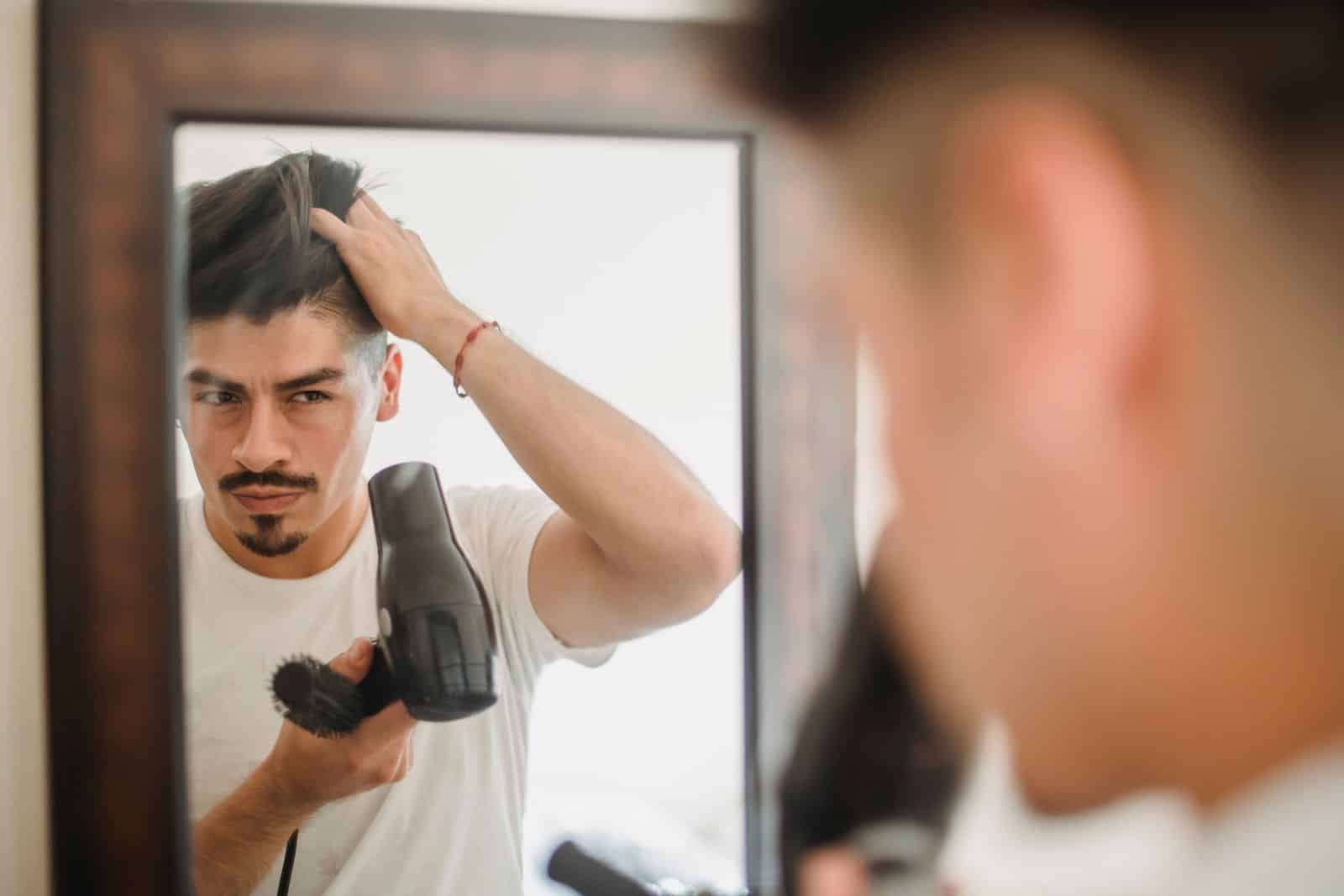
A hairdryer is the most underrated styling tool. Blow-drying hair in the direction you want it to sit gives volume and makes any product hold better. Use medium heat, keep it moving, and finish with a blast of cool air to set the shape.
Common mistakes
- Too much product. This is the most common problem. If your hair looks wet or shiny when you didn’t intend it to, use half as much.
- Applying to the front first. The front ends up heavy and flat.
- The wrong product for your hair. Heavy pomade on fine hair, or light cream on thick hair, will frustrate you regardless of technique.
- Never washing it out. Product buildup makes hair dull and flat. If you use oil-based pomade, an occasional clarifying shampoo helps.
- Ignoring the haircut. Product finishes a style; it can’t create one. A good cut that suits your hair type makes everything easier.
Keep it simple
Most men need one product, two at most: a styling product suited to their hair, and perhaps a pre-styler like sea salt spray. Buy a small size first, give it a week of proper use, and only then decide whether it works. Like any purchase, the same habits that help you judge quality before you buy apply: read the ingredients and ignore the hype.
If you’re working on a classic look, see our guide to the side parting hairstyle. For facial hair, our beard grooming steps cover trimming and conditioning.
Quick checklist
- Identify your hair’s thickness, density and texture first.
- Matte and textured: clay or paste. Neat and shiny: pomade. Soft and natural: cream.
- Start with a pea-sized amount and warm it between your palms.
- Apply back to front, roots first.
- Blow-dry into shape and finish on cool.
- Wash product out regularly to prevent buildup.
Frequently asked questions
What’s the best hair product for fine or thinning hair?
Usually a matte clay or a texturizing spray, applied to dry hair after blow-drying for volume. Heavy, shiny products tend to make fine hair look flatter and thinner.
Is pomade bad for your hair?
For most people, no. The main issue is buildup with oil-based pomades, which can make hair look dull and is harder to wash out. Water-based pomades avoid most of that.
How often should I wash out hair product?
Many men rinse daily and shampoo every day or two, depending on their hair and scalp. If your hair feels heavy, waxy or looks dull, it’s time for a thorough wash.
Updated November 2026. Some links on this site may be affiliate links; see our editorial policy.