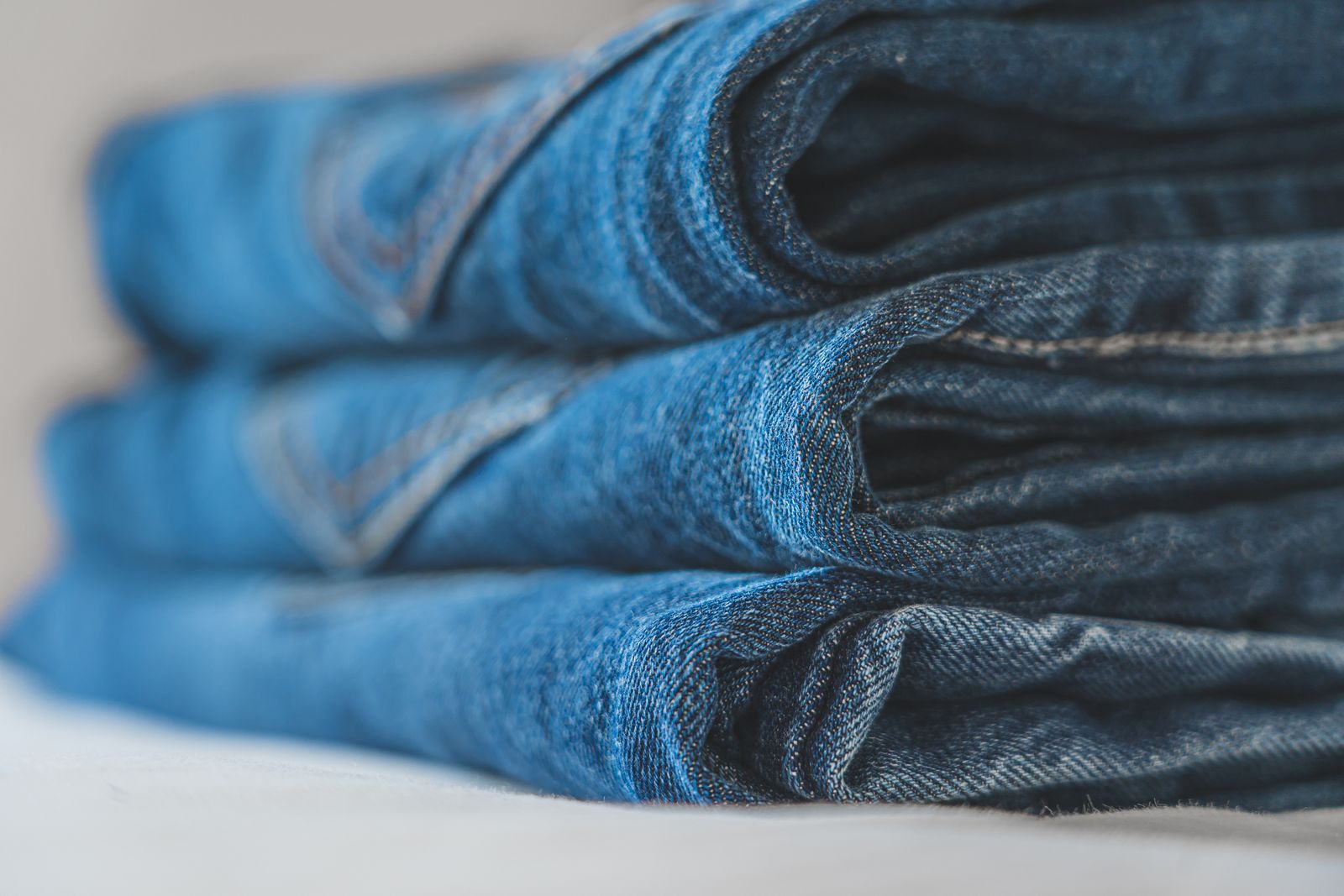
Most jeans are sold already washed, faded and distressed in a factory. Raw denim is the opposite: it comes to you stiff, dark and untouched, and the fading happens as you wear it. The result is a pair of jeans shaped by your own body and habits, and a well-made pair can stay in your rotation for many years.
Raw denim has a reputation for being complicated and a little precious. It does not need to be. This guide covers what raw denim is, the terms you will see on labels, how to choose a pair that fits, and how to wear and wash it without overthinking it.

What “raw denim” means
Denim is a cotton twill, usually woven with indigo-dyed threads running lengthwise (the warp) and undyed threads running across (the weft). That is why jeans are blue on the outside and paler on the inside.
Raw (or “dry”) denim has not been washed after it was dyed and sewn. Regular jeans are washed, sometimes with stones or chemicals, to soften them and create a worn look before they reach the store. Raw denim skips that step. The indigo is still fully on the surface, so it wears away gradually where you bend, sit and carry things.
Terms you will see on the label
| Term | What it means | Why it matters |
|---|---|---|
| Raw or dry | Not washed after dyeing and sewing | Dark, stiff at first; fades with your wear |
| Sanforized | Pre-shrunk at the mill | Shrinks only a little; buy close to your size |
| Unsanforized (loomstate) | Not pre-shrunk | Can shrink noticeably; follow the maker’s sizing advice |
| Selvedge | Self-finished edge from a narrow shuttle loom | A sign of a traditional process, not a guarantee of quality |
| Fabric weight (oz.) | Weight per square yard of fabric | Lighter is cooler and softer; heavier is stiffer and slower to break in |
| Stretch | Small amount of elastane in the cotton | More comfortable, but may bag out and wear faster |
Selvedge denim gets a lot of attention, and it is a nice detail, but it is only one sign of quality. Our guide to selvedge, canvas and horn explains how to read details like this without overpaying for them.
Why raw denim is worth considering
- The fades are yours. Creases behind the knees, whiskers at the hips and the outline of your wallet appear where you actually move and carry things.
- Durability. Good raw denim is often made from sturdy cotton and sewn with strong seams. Without factory distressing, the fabric starts its life intact.
- Versatility. A dark, clean pair of jeans dresses up better than a faded one. It works with a blazer as well as a T-shirt.
- Less trend risk. A plain dark straight or tapered jean has looked appropriate for decades. Heavily ripped, bleached or embellished jeans tend to date fast.
From experience: My worst purchase was a Cuban silver chain. It was fine when I was young, but it dated very quickly. Trend washes and distressed details on jeans work the same way. A plain, dark pair that simply wears in with you is the one you will still reach for years later.
How to choose your first pair
Start with a middle-weight fabric
For a first pair, something in the light-to-medium range (roughly 12 to 14 ounces is common) is easier to break in and comfortable in more seasons. Very heavy denim is a hobby in itself; try it later if you enjoy the process.
Pick a classic cut
A straight or slim-tapered leg with a medium rise is the safest choice. It works with boots, sneakers and leather shoes, and it does not look tied to a particular year. Very skinny and very wide cuts are more fashion-driven.
Get the sizing right
- Sanforized denim: Buy close to your normal waist size. Raw denim stretches in the waist and seat with wear, so a snug (not painful) fit is normal at first.
- Unsanforized denim: The maker will usually tell you how much to size up and recommend a soak before wearing. Follow their guidance rather than guessing.
- Length: Leave some extra length if you plan to cuff, or have them hemmed after any first soak or wash so you do not lose length to shrinkage.
Check the construction
Look for straight, dense stitching, especially on the seat and inseam. Bar tacks or rivets at stress points, sturdy pocket bags and a firmly attached button or button fly are good signs. The same quality checks you would use on any garment apply here.

Breaking them in
The first few weeks are the least comfortable. The fabric is stiff and may feel tight in the waist and thighs. That eases as the cotton softens and molds to you.
- Wear them often. The more you wear them, the faster they soften and the more defined the fades.
- Expect indigo transfer. Dark raw denim can rub dye onto light sofas, car seats and white sneakers for the first weeks. Be careful with light-colored upholstery.
- Roll the hem if they are long, and let the fabric settle before getting them hemmed.
Washing: the honest answer
There is plenty of folklore about never washing raw denim. You do not need to follow it.
Many owners wait several months before the first wash because it helps lock in sharp creases and high-contrast fades. That is a style choice, not a rule. If your jeans get dirty or start to smell, wash them.
A simple method
- Turn the jeans inside out and button them.
- Wash in cold water on a gentle cycle, or soak them in a tub, with a small amount of mild detergent.
- Rinse well and hang them to dry. Avoid the dryer, which causes extra shrinkage and wear.
- Wash dark denim on its own the first few times, because indigo bleeds.
Putting jeans in the freezer to “kill bacteria” is a popular myth; it does not clean them. Airing them out and spot-cleaning between washes works better.
Repairs and long life
Raw denim tends to wear first at the crotch, the inner thighs and the back pocket edges. Small holes can be darned or patched by a tailor or denim repair shop long before they become large tears. Repairing a favorite pair is usually cheaper and better looking than replacing it. That is the same logic behind our cost-per-wear argument against fast fashion.
How to wear raw denim
- Casual: A white or gray T-shirt, a crewneck sweater and leather sneakers.
- Smart casual: An oxford button-down, a navy blazer and brown leather boots or loafers.
- Cold weather: Flannel or chambray shirts, a wool overshirt and work boots.
Keep the rest of the outfit simple. Dark denim looks best with clean, classic pieces.
Checklist before you buy
- Dark, plain wash with no factory distressing
- Classic straight or slim-tapered cut
- Sanforized for an easier first pair, or clear sizing advice if unsanforized
- Solid stitching and reinforced stress points
- A fit that is snug but comfortable in the waist, with room to sit down
Frequently asked questions
Do raw denim jeans shrink?
Sanforized raw denim usually shrinks only slightly. Unsanforized denim can shrink significantly on its first soak, so buy according to the maker’s sizing guidance.
How long before I should wash raw denim?
There is no required time. Some people wait months for sharper fades; others wash when the jeans are dirty. Both are fine.
Is selvedge denim always better?
No. Selvedge shows a traditional weaving process, but fabric quality, fit and construction matter more.
Can I wear raw denim to work?
In many business-casual offices, yes. A dark, clean pair with a button-down and a blazer looks more polished than faded jeans.
Updated November 2026. Some links on this site may be affiliate links; see our editorial policy.