Most home bar kits are sold as boxed sets with a dozen pieces, half of which you’ll never touch. A good kit is smaller than you think: about eight tools, three types of glass and a plan for ice. With those, you can make nearly every classic cocktail properly, and everything else is a nice-to-have.
This guide lists the tools that earn their place, what to look for in each, what you can skip, and a short set of drinks to practice with once the kit is together. If you’re thinking about bottles and layout as well, our guide to building a home bar worth being proud of covers that side.
The core kit: eight tools
1. A shaker
You have two main choices. A two-piece tin-on-tin (Boston) shaker is what most professional bartenders use: two metal tins, one larger than the other, that seal together. It’s fast, durable, chills quickly and nothing can shatter. A three-piece cobbler shaker has a built-in strainer and cap. It’s easy for beginners but the lid can stick when cold and the built-in strainer is slow.
If you’re buying one, buy a weighted tin-on-tin set. Look for solid stainless steel with smooth, rolled rims and a weighted base on at least one tin.
2. A jigger
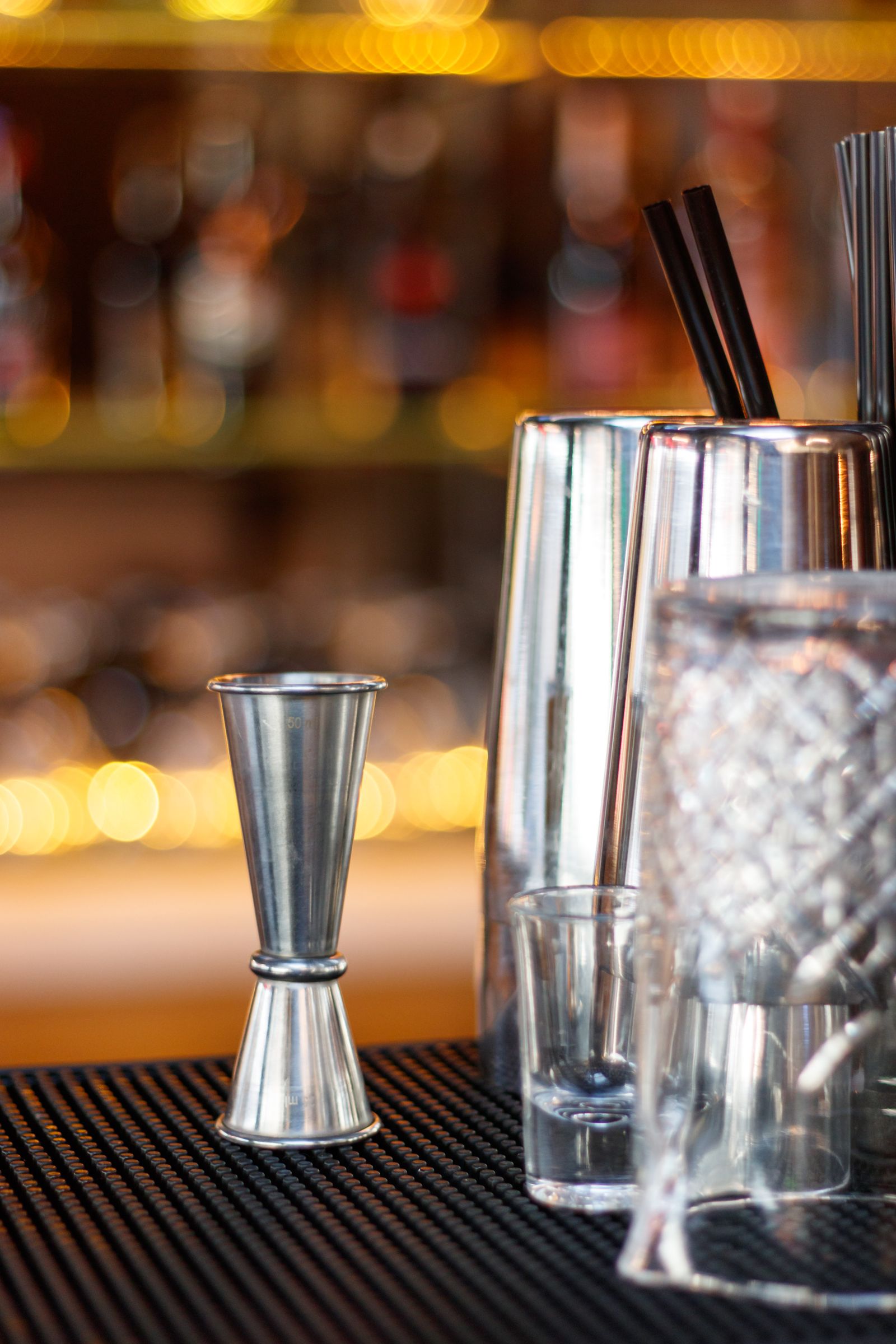
Measuring is what separates a balanced drink from a guess. A double-sided jigger with 1 oz and 2 oz cups, plus internal markings for ½ and ¾ oz, covers almost every recipe. Tall, narrow “Japanese-style” jiggers are easier to pour accurately than wide, squat ones.
3. A mixing glass
Stirred drinks like the Martini, Manhattan and Negroni should be stirred, not shaken, so they stay clear and silky. A heavy glass with a pouring spout is ideal. In a pinch, the larger tin of your shaker or a sturdy pint glass works.
4. A bar spoon
A long, thin spoon (around 30 cm) with a twisted handle lets you stir smoothly against the inside of the glass. Look for a well-balanced spoon in stainless steel; the cheap ones bend and have sharp seams.
5. A Hawthorne strainer
The flat strainer with a coiled spring that fits over a shaker tin. It holds back ice and most fruit pulp. Choose one with a tight coil and a tab you can push with a finger to close the gap.
6. A fine-mesh strainer
A small conical sieve held under the Hawthorne strainer to catch ice chips and pulp for a clean texture in shaken drinks served “up.” Inexpensive and worth having.
7. A handheld citrus press
Fresh juice is the single biggest upgrade most home bartenders can make; bottled lime and lemon juice taste flat by comparison. A sturdy hinged press for limes and lemons is fast and easy to clean. Enameled or stainless steel models last longer than thin painted ones.
8. A paring knife, peeler and small board
For cutting citrus and taking wide strips of peel to express over a drink. A Y-peeler gives clean, wide twists with little bitter white pith. You probably have these in your kitchen already; a separate small board for the bar keeps citrus oil off everything else.

Quick comparison: what you need and what you can skip
| Tool | Needed? | Why |
|---|---|---|
| Tin-on-tin shaker | Yes | Shaken sours and citrus drinks |
| Jigger | Yes | Consistent, balanced measurements |
| Mixing glass | Yes (or a substitute) | Clear, silky stirred drinks |
| Bar spoon | Yes | Stirring and layering |
| Hawthorne + fine strainer | Yes | Clean pour without ice chips |
| Citrus press | Yes | Fresh juice every time |
| Muddler | Optional | Only for drinks like the Mojito or Old Fashioned with fruit |
| Ice molds (large cube) | Strongly recommended | Slow dilution for spirit-forward drinks |
| Electric ice crusher, novelty openers, bottle stands | Skip | Rarely used; take up space |
Glassware: three shapes cover almost everything
- Rocks (old fashioned) glass: for spirits on a large cube and drinks like the Old Fashioned and Negroni.
- Coupe or Nick & Nora: stemmed glasses for drinks served without ice, such as the Martini, Manhattan and Daiquiri. The stem keeps your hand from warming the drink.
- Highball (or Collins): tall glass for drinks topped with soda, such as the Gin and Tonic, Whiskey Highball and Tom Collins.
Four of each is enough for most households. Simple, thin-rimmed glass looks better and feels better in the hand than heavily decorated sets, and it’s easier to replace a single broken piece when the design is classic.
Ice is an ingredient
Ice chills and dilutes, and dilution is part of the recipe. Two habits make a large difference:
- Use plenty of fresh ice when shaking or stirring. More ice chills faster with less meltwater. Old freezer ice picks up odors.
- Serve spirit-forward drinks over one large cube. Silicone molds for 2-inch cubes are cheap and melt slowly, so the last sip tastes like the first.
Sparkling water, tonics and syrups
Highballs live or die on the fizz. Keep sparkling water cold and freshly opened, pour it down the side of the glass, and stir gently once so you don’t knock out the bubbles. A basic simple syrup (equal parts sugar and water, stirred until dissolved and refrigerated) covers most recipes; make small batches so it stays fresh.
From experience: A SodaStream with a few handcrafted tonics and syrups is the simplest upgrade I know for a home bar. With fresh fizz and a good syrup on hand, any occasion becomes a cocktail hour.
Five drinks to learn first
These cover the main techniques. Once you can make them well, most other recipes are variations.
- Old Fashioned (built): whiskey, a little sugar or syrup, bitters, stirred over a large cube, orange peel.
- Martini or Manhattan (stirred): spirit plus vermouth, stirred with ice until very cold, strained into a chilled coupe.
- Daiquiri (shaken): rum, fresh lime juice and simple syrup, shaken hard and double-strained. The template for every sour.
- Whiskey Sour (shaken): the same structure with whiskey and lemon; some recipes add egg white for texture.
- Highball (built): spirit over ice, topped with cold soda or tonic. Simple, and a good test of your ice and fizz.
Practicing these also makes you a better host. A guest who’s offered a well-made drink feels looked after; see our notes on hosting houseguests with genuine grace for the rest of that picture.
Buying once: what quality looks like
- Solid stainless steel (often listed as 18/8 or 18/10) rather than plated metal that can flake.
- Clean welds and rolled edges with no sharp seams.
- Weighted shaker bottoms that sit flat and don’t dent easily.
- Glassware with an even rim and no visible bubbles or seams.
- Simple, classic designs that can be replaced piece by piece.
Widely available bar tools from established barware makers and restaurant-supply stores are usually better value than gift-boxed sets, because they’re built for daily use in busy bars.
Checklist
- Tin-on-tin shaker
- Double-sided jigger with ½ and ¾ oz marks
- Mixing glass and bar spoon
- Hawthorne and fine-mesh strainers
- Citrus press, paring knife, Y-peeler, small board
- Large-cube ice molds
- Four each of rocks, coupe and highball glasses
Frequently asked questions
Do I need a muddler?
Only if you make drinks that call for crushing fruit or herbs, such as the Mojito. Many people never use one; the back of a wooden spoon works in a pinch.
Shaken or stirred: how do I know?
A common rule: shake drinks that contain citrus, juice, cream or egg; stir drinks made only of spirits, vermouth, bitters and syrups.
Is a boxed cocktail set a good gift?
It can be, but check what’s included. A few well-made essentials beat a large set of light, plated tools that bend or rust.
Please drink responsibly, and never drink and drive.
Updated November 2026. Some links on this site may be affiliate links; see our editorial policy.