Good coffee at home doesn’t require a counter full of gadgets. It requires fresh beans, a decent grinder, clean water at the right temperature and a brewing method you actually enjoy using. Get those right and a simple setup will beat most café cups. Get them wrong and no machine will save you.
This guide covers which pieces of coffee gear are worth buying once and keeping for years, which ones you can skip, and how to choose a brewing method that fits the way you drink coffee.
Start with the grinder, not the brewer
If you only upgrade one thing, make it the grinder. Ground coffee goes stale quickly, and an uneven grind is the most common reason home coffee tastes both bitter and sour at the same time: the fine particles over-extract while the coarse chunks under-extract.
- Burr grinders crush beans between two abrasive surfaces and produce a consistent size you can adjust. This is what you want.
- Blade grinders chop beans with a spinning blade, like a small blender. They’re inexpensive but produce a mix of dust and chunks, and you can’t dial in a setting.
- Hand grinders with good burrs are a quiet, compact option that often grinds as evenly as electric models at the same price. They take a minute or so of cranking per cup.
- Electric burr grinders save effort if you make several cups a day or brew for a household.
Look for a grinder with replaceable burrs and available spare parts. Well-known names such as Baratza for electric grinders and Comandante or 1Zpresso for hand grinders have a reputation for parts support, which is what lets a grinder last a decade instead of a few years.

Choose a brewing method that fits your routine
Every brewing method can make an excellent cup. The best one is the one that matches how much time you have in the morning, how many cups you make, and the kind of flavor you like.
| Method | Flavor profile | Effort | Best for |
|---|---|---|---|
| Pour-over (V60, Chemex, Kalita) | Clean, bright, lighter body | Moderate; needs attention for 3–4 minutes | One or two cups, people who enjoy the ritual |
| French press | Full-bodied, rich, some sediment | Low; steep and press | Several cups at once, darker roasts |
| AeroPress | Clean to rich, very adjustable | Low; quick cleanup | Travel, small kitchens, single cups |
| Moka pot | Strong, concentrated, espresso-like | Moderate; stovetop | Strong coffee without an espresso machine |
| Drip machine | Balanced, consistent | Very low | Households, batch brewing |
| Espresso machine | Concentrated, base for milk drinks | High; learning curve and maintenance | Daily lattes and cappuccinos |
If you’re unsure, a French press or an AeroPress is an easy, inexpensive start. Both are forgiving, and neither needs paper filters you can run out of (the AeroPress can use a metal filter).
The supporting gear that makes a real difference
A kitchen scale
Measuring coffee by the scoop is inconsistent because different beans and roasts have different densities. A simple digital scale that reads in grams lets you repeat a good cup. A common starting ratio is about 1 gram of coffee to 15–17 grams of water; adjust to taste from there.
A kettle you can control
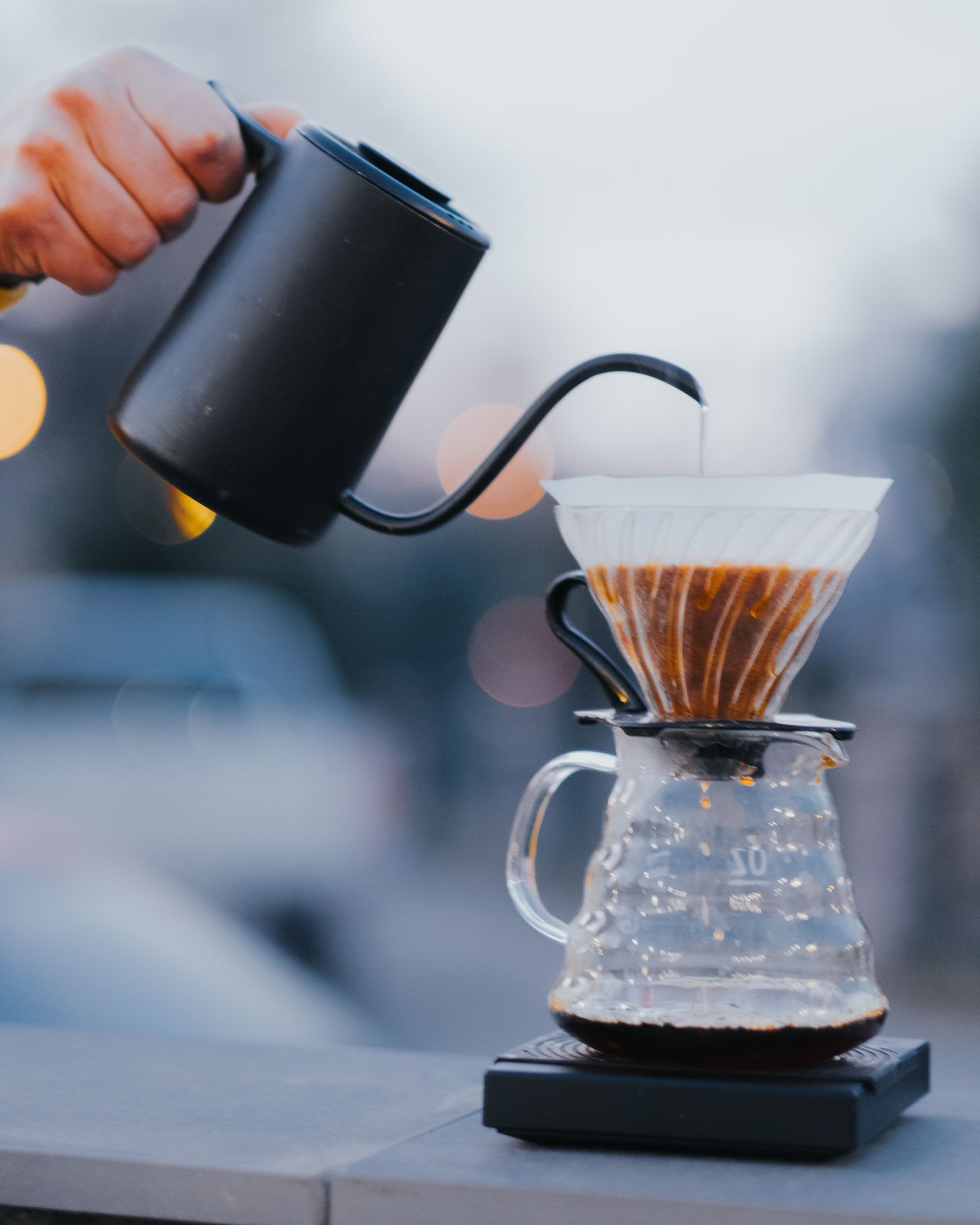
For pour-over, a gooseneck kettle lets you pour slowly and precisely. A temperature-controlled electric gooseneck is convenient, but a stovetop gooseneck works fine. Water just off the boil, roughly 195–205°F (about 90–96°C), is the usual target for most methods.
Good water and a storage container
Coffee is mostly water, so if your tap water tastes off, a basic filter pitcher helps. Store beans in an airtight, opaque container at room temperature, away from heat and light. Buy amounts you’ll use within a few weeks of the roast date, and grind just before brewing.
From experience: For more than 20 years I’ve helped people find quality goods, and one lesson holds in every category: things that are built well last, and they hold their resale value if you ever lose interest. A solid grinder or a well-made kettle is the same. A cheap gadget that breaks or gets replaced is a short-term fix with very little value left at the end.
What to skip or delay
- Pod machines are convenient, but the per-cup cost adds up, the flavor ceiling is limited, and the pods create ongoing waste.
- All-in-one machines with built-in blade grinders often do several jobs poorly, and when one part fails the whole unit is out of service.
- Gadgets that solve problems you don’t have yet, such as specialty tampers, distribution tools and fancy dosing cups. Learn your method first.
- An expensive espresso machine as a first purchase. Espresso needs a capable grinder, practice and regular maintenance. Make sure you’ll use it daily before committing.
How to tell if coffee gear is built to last
The same checks that apply to anything you buy apply here. (For a fuller version, see our guide on how to judge quality before you buy.)
- Materials: stainless steel, glass, ceramic and solid metal housings age better than thin plastic.
- Serviceability: replaceable burrs, gaskets, filters and carafes mean a worn part doesn’t end the product’s life.
- Simplicity: fewer electronics means fewer things to fail. A manual brewer can last indefinitely.
- Warranty and parts support: a maker that sells spare parts expects its product to be repaired, not thrown away.
From experience: I’ve always preferred buying from makers with real provenance that focus on one thing and do it well. That’s how I approach watches, and it’s a sensible way to shop for coffee gear too: a company known for grinders is usually a better bet for a grinder than a brand that puts its name on every small appliance.
Thinking in terms of cost per use helps here as well. A grinder used every morning for ten years costs very little per cup; our article on cost per wear and cost per use walks through the math.
A simple buy-once setup
- A burr grinder (hand or electric) with available spare parts.
- One brewer that fits your routine: pour-over, French press or AeroPress.
- A digital scale that reads in grams.
- A kettle, ideally a gooseneck if you brew pour-over.
- An airtight, opaque container for beans.
That’s it. Add an espresso machine or a second brewer later if you find yourself wanting one. And if you like hosting, the same buy-less-but-better approach works for a home bar; see the cocktail kit every home bar needs.
Key takeaways
- Fresh beans and a burr grinder matter more than the brewer.
- Pick a method that fits your mornings, not the most impressive machine.
- Weigh coffee and water so you can repeat a good cup.
- Favor simple, repairable gear from makers that specialize.
- Clean your equipment regularly; old coffee oils make fresh coffee taste stale.
FAQ
Is a hand grinder good enough for daily use?
Yes, for one or two cups a day. A quality hand grinder produces a consistent grind and takes about a minute of effort. If you brew for several people, an electric burr grinder is more practical.
How often should I clean my coffee equipment?
Rinse brewers after each use. Wash them properly every few days, brush out your grinder every couple of weeks, and descale kettles and machines periodically, more often if you have hard water. Follow the maker’s instructions for anything with electronics.
Does pre-ground coffee really make that much difference?
Usually, yes. Ground coffee loses aroma within days, while whole beans stay fresher for a few weeks after roasting. Pre-ground can still make a decent cup, but grinding fresh is the easiest single improvement most people can make.
Updated November 2026. Some links on this site may be affiliate links; see our editorial policy.