Nobody expects you to know which of five forks is for the fish course. What people do notice is whether you’re pleasant to eat with: whether you pay attention, eat without making a mess or noise, and make the people around you comfortable. That’s what table manners are for.
This guide skips the obscure rules and focuses on the ones that still matter at business lunches, dinners with a partner’s family, weddings and nights out with friends.
The principle behind every rule
Almost every table manner exists for one of three reasons: to keep the meal pleasant for others, to keep things clean, or to signal that you’re paying attention to the people you’re with. When you face a situation you don’t know the rule for, ask which choice would make the people around you most comfortable. That answer is usually correct.
Your phone
This is the most common modern mistake, and the easiest to fix.
- Keep it off the table. A phone on the table, even face down, signals that you’re waiting for something more important.
- Silence it before you sit down.
- If you must take a call or answer a message, excuse yourself briefly and step away. Mention it in advance if you’re expecting something urgent.
- Photos of food are fine in casual settings if they take a few seconds. At a business meal or a formal dinner, skip them.
Before the food arrives
- Napkin on your lap once everyone is seated. If you leave the table mid-meal, place it loosely on your chair or to the left of your plate.
- Wait for the host to sit, or to signal that you should, before sitting at a formal dinner.
- Know your bread plate and glasses. A simple memory aid: bread on the left, drinks on the right. Make the letter “b” with your left hand and “d” with your right.
- Order sensibly when someone else is paying. Pick something in the middle of the menu’s price range unless your host clearly encourages otherwise.

Using your utensils
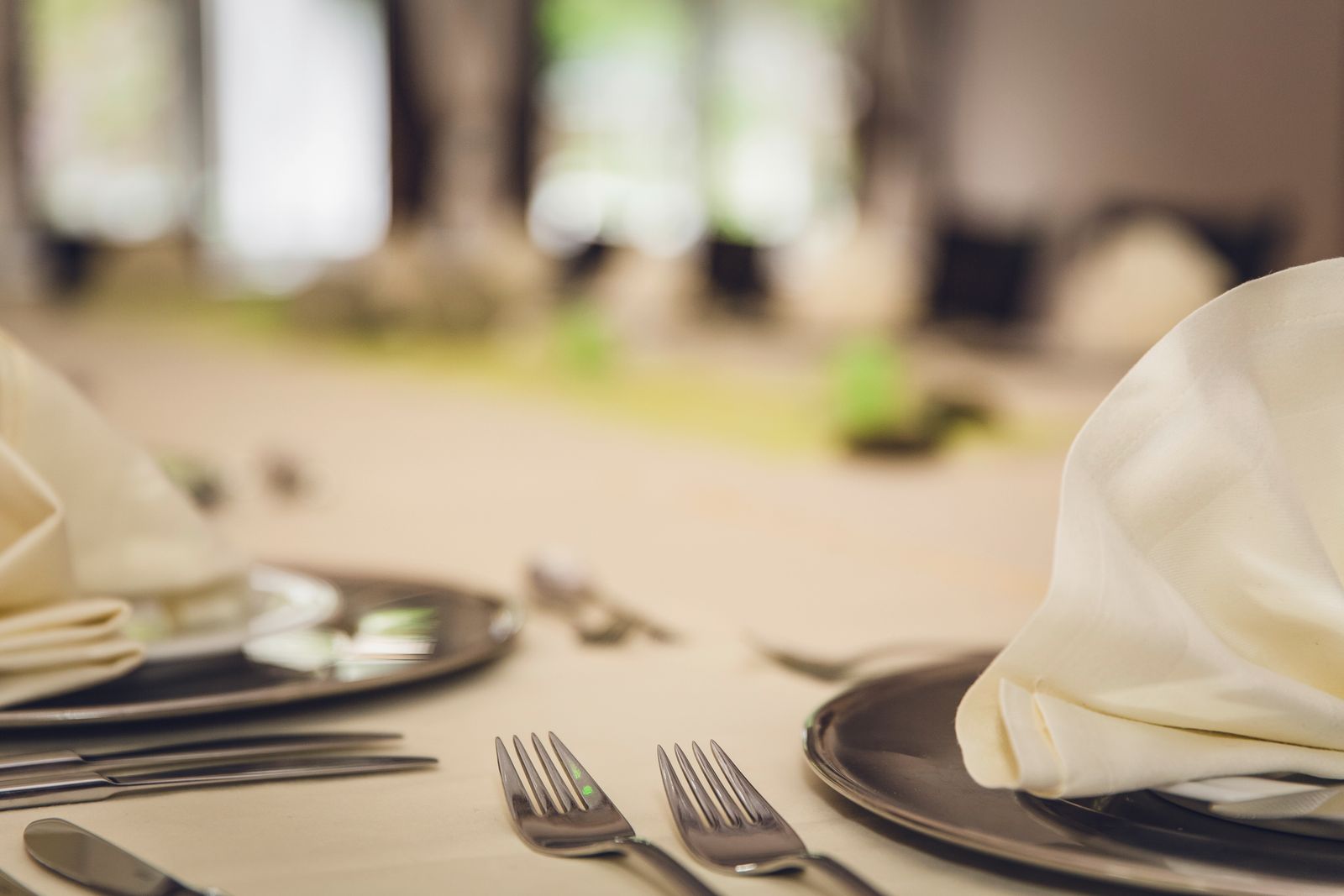
At a formal setting, start with the utensils farthest from your plate and work inward with each course. Dessert utensils are often placed above the plate.
There are two accepted ways to use a knife and fork, and both are fine:
| Style | How it works | Resting position | Finished position |
|---|---|---|---|
| American (zig-zag) | Cut with the knife in the right hand, then set the knife down and switch the fork to the right hand to eat | Knife across the top of the plate, fork below it | Knife and fork side by side, diagonally across the plate |
| Continental (European) | Fork stays in the left hand, tines down; knife stays in the right | Knife and fork crossed or in an inverted V on the plate | Knife and fork side by side, diagonally across the plate |
Once a utensil has been used, it shouldn’t touch the tablecloth again. Rest it on your plate. Cut one or two bites at a time rather than cutting your whole meal at once.
Eating and conversation
- Wait until everyone is served before starting, unless the host tells you to go ahead. At a large table, it’s common to start once a few people near you have their food.
- Small bites, mouth closed. It sounds basic, but it lets you join the conversation without making people wait.
- Pass dishes to the right, and pass salt and pepper together even if someone asks for only one.
- Ask for things to be passed rather than reaching across someone.
- Pace yourself so you aren’t finishing far ahead of or far behind everyone else.
- Talk to people on both sides of you, not just the one you know best.
- Keep elbows off the table while eating. Resting forearms on the edge between courses is generally fine.
Foods that trip people up
A few foods cause most of the awkward moments. A little preparation helps:
- Bread: tear off a bite-sized piece and butter it as you go, rather than buttering the whole roll.
- Soup: spoon away from you, sip quietly from the side of the spoon, and tip the bowl away from you to get the last of it.
- Pasta: twirl long pasta against the plate or a spoon in small amounts rather than cutting it.
- Shellfish and ribs: using your hands is expected; use the provided bowls, wipes or extra napkins.
- Something you can’t eat: leave it on the plate without comment. If it’s already in your mouth, remove it discreetly the way it went in, with a fork or fingers, and place it on the edge of your plate.
- When in doubt: follow the host’s lead, or order something easy to eat at an important meal.
Drinks and toasts
Let the host offer the first toast. When you clink, make eye contact. If you don’t drink alcohol, it’s perfectly fine to toast with water or another drink; nobody should pressure you otherwise. If wine is part of the meal and you’re the one ordering, our guide to ordering wine at a restaurant keeps it simple.
Paying and leaving
- Settle the bill discreetly. If you’re hosting, arrange payment with the server away from the table, or before the meal.
- If someone else is hosting, offer once to contribute; if they decline, thank them sincerely.
- Tip appropriately. See our tipping etiquette guide for norms in different settings.
- Thank the server and, at a private dinner, the host and whoever cooked.
After the meal: the part most people skip
A short note afterward is one of the simplest ways to stand out. Thank your host for a dinner, or follow up after a business meal with something specific you enjoyed or discussed.
From experience: Thank-you notes and personal notes after meeting someone are the etiquette I think matters most today. Very few people send them anymore, which is exactly why they’re remembered. A few handwritten lines after a dinner or a first meeting say more about you than anything you did at the table.
If you’re the one hosting, many of the same principles apply in reverse; see hosting houseguests with genuine grace.
Quick checklist
- Phone silenced and off the table.
- Napkin on your lap once seated.
- Bread on the left, drinks on the right.
- Utensils from the outside in.
- Wait until others are served.
- Pass to the right; ask rather than reach.
- Thank the host, the server and, afterward, in writing.
FAQ
What if I use the wrong fork?
Keep going. Nobody is keeping score, and drawing attention to it is more awkward than the mistake. If you need a replacement utensil, quietly ask the server.
Is it rude to send food back at a restaurant?
Not if there’s a real problem, such as it’s cold, wrong or undercooked. Mention it politely and briefly to the server. At someone’s home, eat what you can and leave the rest without comment, and let your host know in advance about any dietary needs.
Who pays at a business meal?
Generally, whoever extended the invitation. If you invited someone, plan to pay and arrange it discreetly. If you were invited, offer once, and accept graciously if they decline.
Updated November 2026. Some links on this site may be affiliate links; see our editorial policy.