Tipping causes more quiet anxiety than almost any other everyday transaction. The rules are unwritten, they vary by country, and the tablet at the coffee counter now asks you to decide in front of the person who made your drink. The good news is that a handful of principles cover nearly every situation, and once you know them you can tip quickly, fairly and without second-guessing.
This guide covers the customary ranges in the United States, how to handle the newer situations (tip screens, delivery apps, self-checkout), what changes when you travel abroad, and the few cases where you shouldn’t tip at all. The ranges below are common guidelines, not laws; local custom and the quality of service always count.
The principles behind good tipping
Before the numbers, it helps to understand why tipping works the way it does. In the US, many service workers, especially restaurant servers and bartenders, earn a lower base wage and depend on tips for a large part of their income. A tip there isn’t a bonus; it’s part of the price.
- Tip on the pre-tax amount. That’s the standard. Tipping on the post-tax total is generous, not required.
- Tip for the service, not the food. A dish the kitchen got wrong isn’t your server’s fault. Raise it politely and let them fix it.
- Decide before you sit down. Know your default percentage so you’re adjusting from a baseline, not inventing one under pressure.
- Cash is appreciated where it’s practical. It reaches the person directly and quickly. Card tips are fine everywhere they’re offered.
- When in doubt, ask. “Is service included?” is a normal question, especially abroad or for large groups.

Restaurants and bars
Sit-down restaurants
For table service, 18 to 20 percent of the pre-tax bill is the common standard today, with 15 percent reserved for service that was noticeably lacking. Exceptional service, a long stay at a busy table, or a complicated order (substitutions, split courses, a celebration) earns more.
Check the bill before you tip. Many restaurants add an automatic gratuity for parties of six or more, and some add a service charge for everyone. If it’s already there, you don’t need to tip again, though rounding up for great service is a nice gesture.
Wine, BYOB and comps
Tip on the full value of what you received. If a bottle was comped or a manager took a dish off the bill, tip as if you paid for it. If you brought your own wine and paid a corkage fee, add a few dollars for the server’s time opening and pouring it. For more on ordering bottles without fuss, see our guide to ordering wine at a restaurant.
Bars
A dollar or two per drink is the classic rule for simple orders like a beer or a pour of wine. For cocktails or a running tab, 18 to 20 percent of the total is more common. Tipping well on your first round tends to be remembered for the rest of the night.
Counter service and the tip screen
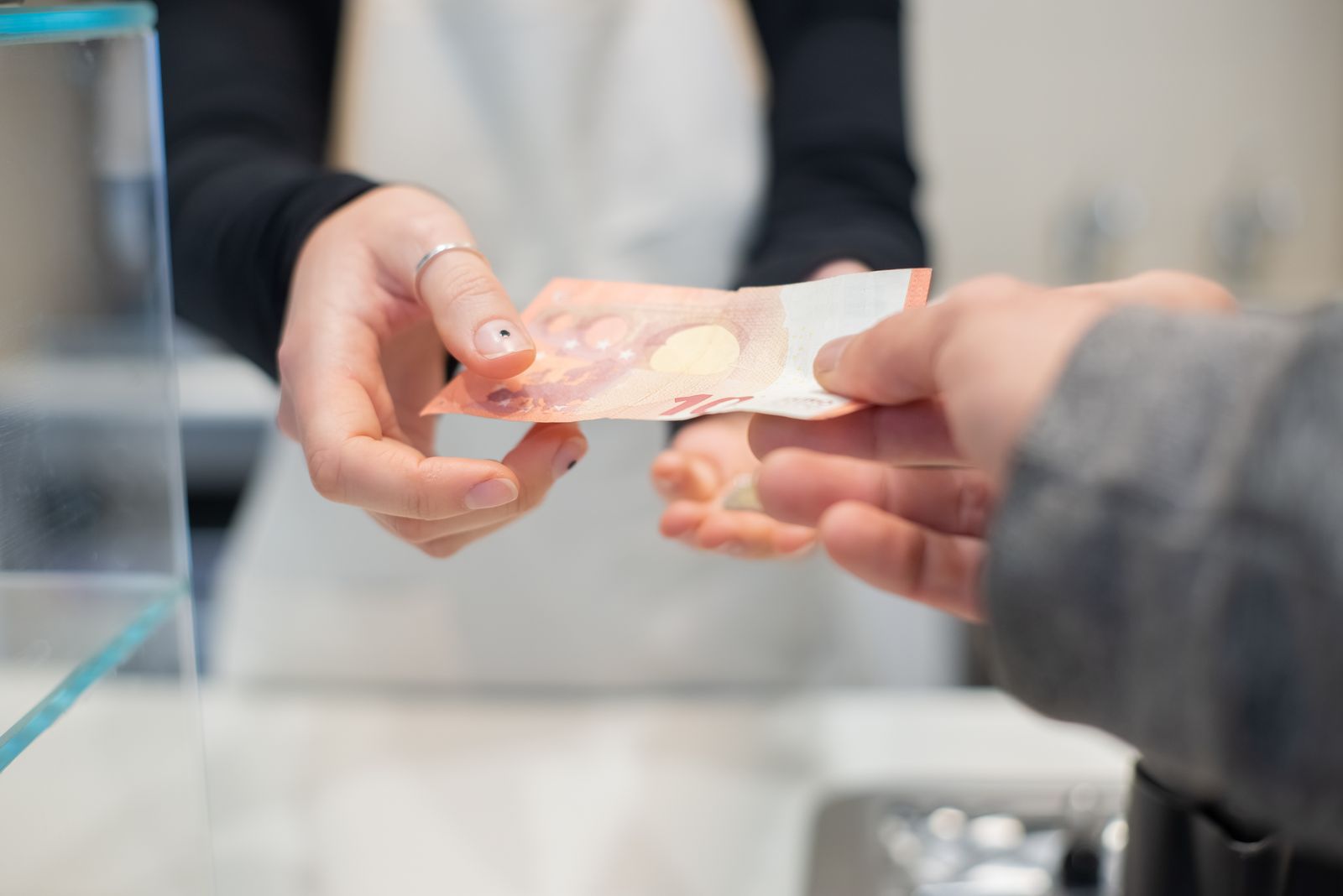
Coffee shops, food trucks and fast-casual counters now often turn a screen toward you with preset options. Tipping here is optional. A dollar or 10 to 15 percent is a kind gesture for a made-to-order drink or a large order, and skipping it for a bottled water or a packaged item is entirely acceptable. Press “no tip” or “custom” without apology if the presets don’t fit.
Quick-reference tipping table
These are the commonly cited US ranges. Adjust up for excellent service, bad weather, holidays or extra effort.
| Situation | Common guideline | Notes |
|---|---|---|
| Sit-down restaurant | 18–20% of pre-tax bill | Check for automatic gratuity on large parties |
| Bartender | $1–2 per drink, or 18–20% of the tab | More for complex cocktails |
| Counter service / tip screen | Optional; $1 or 10–15% | Fine to skip for grab-and-go items |
| Food delivery | 15–20%, with a few dollars minimum | More for bad weather or long distances |
| Taxi or rideshare | 15–20% | Extra if the driver helps with luggage |
| Hotel housekeeping | A few dollars per night | Leave it daily with a note; staff can change |
| Bellhop / porter | A dollar or two per bag | More for heavy or many bags |
| Valet | A few dollars when your car is returned | Some people tip at drop-off as well |
| Barber or hair stylist | 15–20% | Tip the person who washed your hair separately if applicable |
| Coat check | A dollar or two per item | Even if the check itself is free |
| Movers | Varies by job length and difficulty | Per person, in cash; water and snacks are appreciated |
Hotels and travel
Hotels are where people most often forget to tip, mainly because the staff you’d tip are often out of sight. Housekeeping is the big one: leave a few dollars each night rather than one lump sum at checkout, because the person cleaning your room may change from day to day. A short note saying “Thank you, housekeeping” makes it clear the money isn’t left behind by mistake.
Tip the concierge when they do real work for you, like securing a hard-to-get reservation, not for directions to the elevator. Room service usually includes a service charge; read the slip before adding more. We go deeper on timing and hotel-specific situations in hotel etiquette: tipping, timing and the details that signal class.
Tipping when you travel abroad
US tipping norms don’t travel well. In some places a 20 percent tip is confusing; in others it can come across as showing off. A few broad patterns hold:
- Much of Europe: service is often included or wages don’t rely on tips. Rounding up or leaving a small amount for good service is common; 20 percent is not expected.
- Japan: tipping is generally not part of the culture, and an attempt can cause awkwardness. Excellent service is simply the standard.
- Many tourist destinations: modest tips for guides, drivers and hotel staff are customary and appreciated.
- Anywhere: look for “service compris,” “servizio incluso” or a service-charge line on the bill before adding anything.
Carry some small local bills for porters, drivers and housekeeping, since card tipping isn’t always possible. A slim travel wallet that keeps local currency separate from home currency makes this easier. Customs change, so a quick check of a current travel guide for your destination is worth the two minutes.
When not to tip (or when it’s optional)
- Professionals billed by the hour or job, such as doctors, lawyers or accountants.
- Business owners who cut your hair or do the work themselves. Many people still tip; it’s no longer considered a slight if you don’t.
- Employees whose employer prohibits tips. Some government and corporate staff can’t accept them; a sincere thank-you is the right response.
- Self-checkout and purely transactional purchases. A tip screen on a kiosk is not an obligation.
Handling the awkward moments
Service was genuinely bad. Tipping nothing rarely sends the message you intend. Leave a reduced tip and, if it’s warranted, have a calm word with a manager. Problems the kitchen caused aren’t the server’s fault.
You’re splitting the bill. Make sure the total tip reflects the whole bill, not just your share of a discounted portion. One person tipping 10 percent drags the table down.
You’re hosting. The person who invited pays the tip, discreetly, ideally by handing over a card early so guests never see the check. It’s one of the small details that makes hosting feel effortless.
Key takeaways
- Default to 18–20% of the pre-tax bill for table service.
- Check the bill for an included service charge before adding a tip.
- Counter-service tip screens are optional; tip for real effort.
- Leave hotel housekeeping a few dollars each night, not just at checkout.
- Before traveling, check whether tipping is expected; in many countries it isn’t.
Frequently asked questions
Should I tip on the total before or after tax?
Before tax is the standard. Tipping on the after-tax total is slightly more generous and perfectly fine if it’s simpler for you.
Do I tip if a service charge is already on the bill?
Usually not. A service charge or automatic gratuity covers it. If service was outstanding, a small extra amount is a nice gesture, not an obligation.
Is it rude to choose “no tip” on a coffee-shop screen?
No. Counter-service tipping is optional. Many people tip a dollar for made-to-order drinks and skip it for grab-and-go items.
How much should I tip a hotel housekeeper?
A few dollars per night is the common guideline, more in an upscale hotel or if you’ve left the room especially messy. Leave it daily with a short note.
Updated November 2026. Some links on this site may be affiliate links; see our editorial policy.