Most travel problems don’t come from the big things. Your suitcase will almost certainly arrive. What derails a trip is smaller: a passport left on a hotel desk, a boarding pass you can’t find at the gate, a card that gets skimmed, a phone that dies before you’ve called a ride. The right small gear won’t make travel glamorous, but it removes most of those failure points.
This guide covers what a passport cover and travel wallet actually do, how to choose one, and the handful of other small items that earn a place in your carry-on. The goal is a simple system: everything important lives in one or two places, and you always know where those places are.

Passport cover vs. travel wallet: what’s the difference?
The two terms get used loosely, but they solve slightly different problems.
- Passport cover: a thin sleeve that wraps around the passport itself. It protects the cover and pages from wear, spills and bending. It adds almost no bulk, and you can leave the passport inside it at most checkpoints.
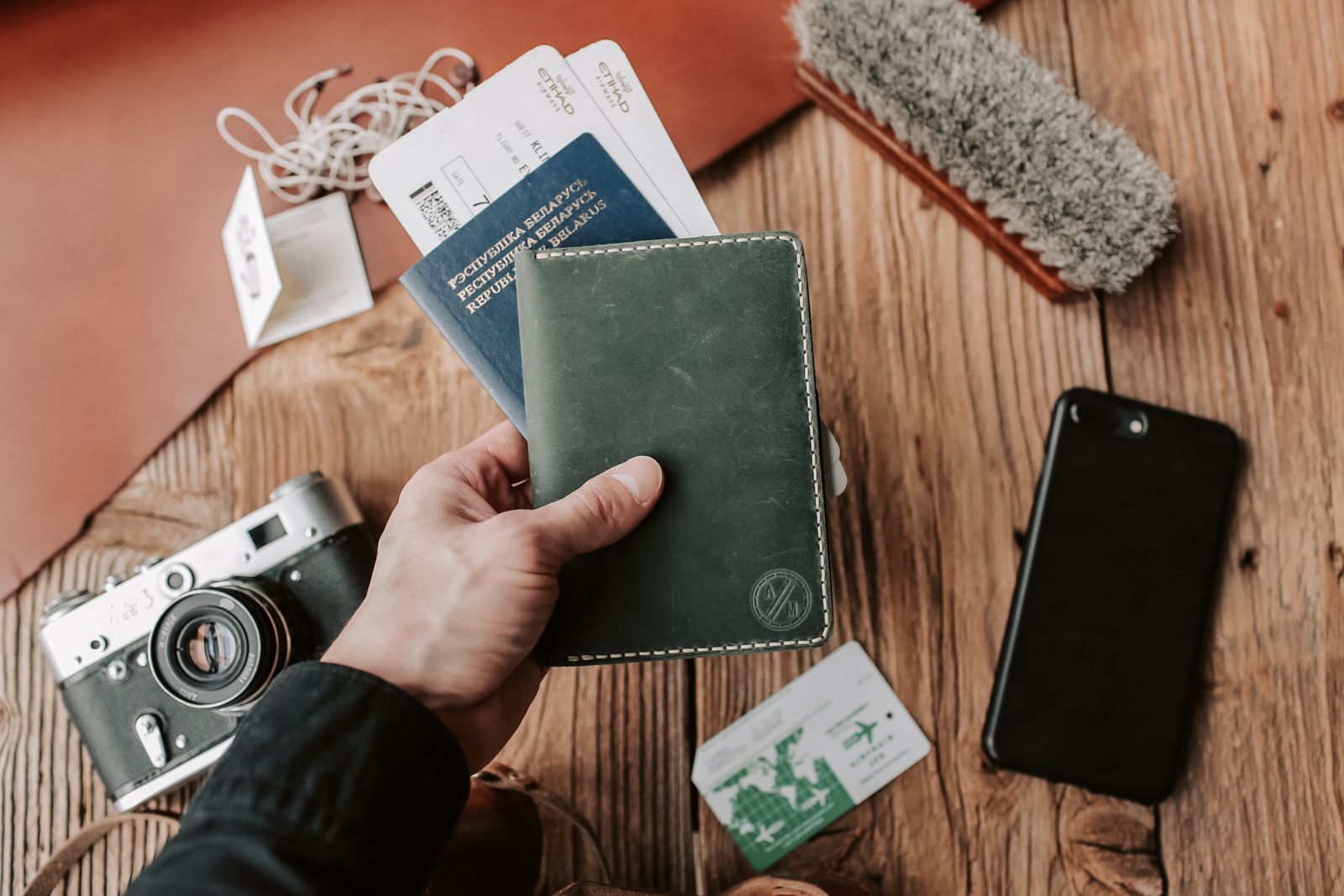
- Travel wallet (passport wallet): a larger folio that holds the passport plus cards, cash, a boarding pass and sometimes a pen or SIM tool. It replaces your everyday wallet for the travel day, so everything you need at the airport is in one place.
- Travel organizer: a bigger zip pouch for documents, chargers and odds and ends. Useful for families or long trips, but too big to carry in a jacket pocket.
If you travel internationally only once or twice a year, a simple cover is enough. If you fly often, or you tend to juggle a passport, a phone and a boarding pass at every line, a travel wallet is worth it.
| Option | Best for | Watch out for |
|---|---|---|
| Passport cover | Occasional international trips, minimal carry | Doesn’t hold cards or cash |
| Slim travel wallet | Frequent flyers who want one pocket item | Overstuffing it until it won’t close |
| Zip travel organizer | Families, long trips, lots of documents | Too large for a pocket; easy to leave on a seat |
| Neck or waist pouch | Crowded areas where pickpocketing is common | Uncomfortable for long days; looks touristy if worn visibly |
How to choose a travel wallet
Material
Leather ages well, is pleasant to handle and lasts for years if it’s decently made. Look for full-grain or top-grain leather and even, tight stitching along the edges. Nylon and other technical fabrics are lighter, shed water better and cost less; they’re a good choice if you travel in wet climates or carry the wallet in a bag rather than a pocket. Avoid thin “bonded” leather, which tends to peel at the folds.
From experience: My own style has become simpler and much less about brands. What I look at now is the material, the workmanship and how something feels in the hand. A travel wallet is a good example: you’ll touch it dozens of times on a single trip, so the feel of it matters more than whose name is stamped on it.
Size and layout
A good travel wallet holds a passport, three to six cards, some folded cash and a boarding pass without bulging. Check whether the passport slot is snug enough that the passport can’t slide out when the wallet is open. A zip closure adds security but also bulk; a simple fold or snap is easier to use quickly at a counter.
RFID blocking
Many travel wallets advertise RFID blocking, which is meant to stop someone from reading contactless cards or an electronic passport chip at close range. Real-world cases of this kind of theft are not common, and passport chips have their own protections. RFID blocking doesn’t hurt, but don’t pay much extra for it or treat it as the main reason to buy a particular wallet. Keeping the wallet in a front pocket does more.
Color
A bright or light interior sounds like a small detail, but it makes cards and folded receipts much easier to spot. On the outside, a color that stands out against a dark seat or a security tray helps you notice it before you walk away.
The small gear that prevents big headaches
Beyond the wallet, a few inexpensive items solve most of the common problems on a travel day. You don’t need all of them; pick the ones that match how you travel.
- Copies of key documents. Keep a photo of your passport’s photo page, visas and reservations on your phone and in a secure cloud folder. A paper copy stored separately from the passport is useful if your phone is lost too.
- A compact power bank and short cable. Boarding passes, ride apps, maps and translations all depend on your phone. Check your airline’s rules: power banks usually have to travel in carry-on, not checked bags.
- A universal travel adapter. One with a couple of USB ports lets you charge several devices from a single outlet.
- A pen. Arrival cards and customs forms still exist in some countries, and borrowing a pen in a long line is harder than it should be.
- Luggage tags with minimal details. A phone number or email is enough. There’s no need to show your home address to everyone in the baggage hall.
- A tracking tag. A small Bluetooth tracker, such as an Apple AirTag or a Tile, in your checked bag tells you whether it made the flight.
- A small zip pouch for loose items. Earbuds, a SIM tool, spare keys and foreign coins have a way of scattering across bags. One pouch keeps them together.
If you’re building out the rest of your carry-on, our guides to the dopp kit every frequent flyer should own and choosing luggage materials that survive baggage handlers cover the bigger pieces.
Build a simple system and stick to it
The gear only works if you use it the same way every time. Most lost passports and wallets aren’t stolen; they’re set down somewhere unusual and forgotten. A few habits prevent that:
- One home for each item. The passport always goes back into the travel wallet, and the wallet always goes in the same pocket or the same bag compartment.
- Pat-down checks. Before you leave a security tray, a seat, a taxi or a restaurant table, check your pockets for passport, phone and wallet.
- Split your money. Carry one card and some cash in the travel wallet, and keep a backup card somewhere else, such as a zipped bag pocket or the hotel safe.
- Don’t overload the wallet. Leave loyalty cards and receipts at home or in your bag. A thinner wallet closes properly and fits a front pocket.
- Reset each night. At the hotel, put the passport, wallet, phone and keys in the same spot so you’re not searching in the morning.
The same thinking applies on the road. Our road trip essentials guide uses a similar approach for the car.
Quick checklist before you leave
- Passport valid for at least six months beyond your return date (many countries require it)
- Passport in its cover or travel wallet, with a digital copy saved
- Primary card and some local cash in the wallet; backup card stored separately
- Boarding pass on your phone, with a screenshot in case the app won’t load
- Power bank charged, with a short cable and a travel adapter
- Pen, luggage tag and a tracker in your checked bag
Key takeaways
- A passport cover protects the passport; a travel wallet organizes everything you need on a travel day.
- Choose for material, size and ease of use. RFID blocking is a minor bonus, not a deciding factor.
- A power bank, document copies and a tracker solve more problems than any premium accessory.
- Consistent habits matter more than the gear itself: one home for each item, and a quick pocket check every time you get up.
FAQ
Can I keep my passport in its cover at security and border control?
Usually, yes. Some officers ask you to remove a cover so they can scan the passport or check it properly, so choose one that comes off easily and don’t argue if you’re asked.
Is RFID blocking necessary?
It isn’t essential. It can add a small layer of protection for contactless cards, but keeping your wallet in a front pocket and watching your cards does more to prevent theft.
Should I carry my passport while sightseeing?
That depends on local rules. Some countries require visitors to carry ID, in which case a passport card or a copy may or may not be accepted. Where it’s allowed, many travelers leave the passport in the hotel safe and carry a copy. Check the official guidance for the country you’re visiting.
Updated November 2026. Some links on this site may be affiliate links; see our editorial policy.