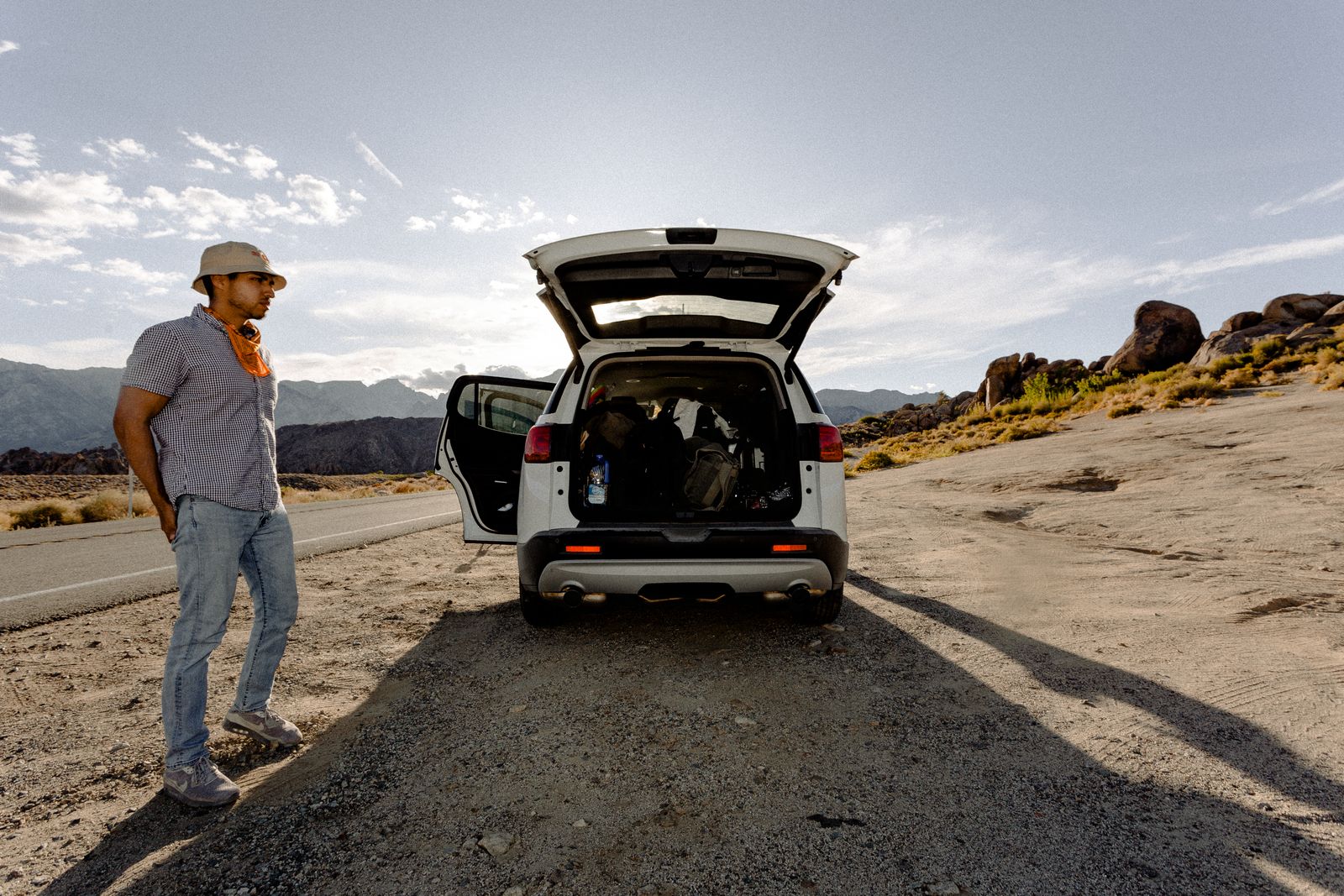
A good road trip feels easy, and that’s usually because someone did a little preparation beforehand. Most of what goes wrong on the road is predictable: a low tire, a dead phone, no water, a forgotten charger, a car that smells like old fast food by day two. None of it requires expensive gear to prevent.
This guide covers what to check on the car before you leave, a sensible emergency kit, what to bring for comfort, and how to keep the trip pleasant for everyone in the car. There’s a packing table and a short checklist at the end.

Check the car before you leave
A quick inspection a few days before departure gives you time to fix anything you find.
- Tires: Check the pressure when the tires are cold, using the figures on the sticker inside the driver’s door (not the maximum printed on the tire). Look for uneven wear and check the tread depth.
- Spare tire: Make sure it’s inflated and that you have the jack and wrench. Many newer cars carry an inflator kit instead of a spare; know which you have.
- Fluids: Check engine oil, coolant and washer fluid. If an oil change is due soon, do it before the trip.
- Wipers and lights: Replace streaky wiper blades and confirm that headlights, brake lights and turn signals work.
- Warning lights: Don’t leave with a warning light on the dashboard. Get it checked first.
If the car is due for a service, book it at least a week ahead so there’s time for any parts to arrive.
Documents and money
- Driver’s license for anyone who will drive.
- Vehicle registration and proof of insurance, in the glove box or on your phone if your state accepts digital copies.
- Roadside assistance details, whether from your insurer, your car’s manufacturer or a motoring club.
- A credit card and some cash for tolls, parking or places that don’t take cards.
- If you’re crossing a border, passports and any documents your rental company or insurer requires.
A sensible emergency kit
You don’t need a survival bunker in the trunk. You do need enough to handle a breakdown or a long delay safely.
| Category | What to pack | Why it matters |
|---|---|---|
| Power | Jumper cables or a portable jump starter | A dead battery is one of the most common roadside problems |
| Tires | Portable tire inflator and a pressure gauge | Lets you top up a slow leak and reach a shop |
| Visibility | Flashlight or headlamp with spare batteries, reflective triangles | Makes you visible and lets you work after dark |
| First aid | A basic first aid kit | Handles cuts, blisters and headaches |
| Supplies | Water, shelf-stable snacks, a blanket | Useful if you’re stuck waiting for help |
| Tools | Multi-tool or pocketknife, duct tape, gloves | Covers small fixes and messy jobs |
| Weather | Ice scraper and small shovel (winter) or extra water (hot climates) | Matches the conditions you’ll actually face |
A good pocketknife earns its place here; see the pocketknife every man should carry for what to look for.
Navigation and charging
Phones handle navigation well, but coverage drops in rural areas and mountains. Download offline maps for the regions you’ll drive through before you leave. A paper road atlas is a cheap backup that never runs out of battery.
- A car charger with enough ports for everyone, plus the right cables.
- A secure phone mount, so the driver isn’t holding or glancing down at a phone.
- A small power bank for stops away from the car.
Comfort for long hours
- Layers: Car temperatures change with the sun. A light sweater or jacket makes it easy to adjust.
- Sunglasses: Polarized lenses reduce glare from the road and other cars.
- Comfortable shoes: Thick or heavy soles make it harder to feel the pedals. Drive in shoes that let you control the car properly.
- A small cooler: Water and simple food save money and spare you from relying on gas-station snacks.
- A clean-car kit: A trash bag, wet wipes, paper towels and a small towel keep the car pleasant for the whole trip.
Eating well on the road
Long drives make it easy to live on coffee and whatever is next to the register. Heavy, greasy meals can leave you sluggish behind the wheel, so lighter, regular meals tend to work better. Pack easy foods such as fruit, nuts, sandwiches and cut vegetables, and drink water through the day. When you do stop to eat, it’s often worth driving a few minutes off the highway; local diners and small-town cafés are part of what makes a road trip memorable.
Pack light and pack smart
It’s tempting to fill the trunk just because the space is there. Resist it. A lighter load makes it easier to find what you need, leaves room for anything you pick up along the way, and keeps the rear view clear.
Keep a small day bag within reach with water, snacks, a charger, sunglasses, any medications and a layer. The main bags can stay in the trunk until you reach the hotel. For techniques that save space, see our guide to packing like a professional.
From experience: I always pack light. If I forget something, I buy it on the way, and that purchase often becomes a great practical souvenir. It’s a better reminder of a trip than most things sold in gift shops, and you’ll use it.
Driving etiquette and sharing the car
- Plan breaks. Many road safety organizations recommend a break about every two hours. Stretch, get some air and switch drivers if you can.
- Agree on driving shifts before you set off, so no one ends up driving tired.
- The passenger navigates. A good co-pilot handles directions, music and snacks so the driver can focus on the road.
- Share music fairly. Take turns choosing, and keep the volume at a level that allows conversation.
- Keep the car tidy. Clear out trash at each fuel stop.
- Split costs clearly. Decide in advance how you’ll share fuel, tolls and parking.
This is general safety information, not professional advice. Follow local laws and your vehicle manufacturer’s guidance.
Quick pre-departure checklist
- Tire pressure checked, spare or inflator kit confirmed.
- Oil, coolant and washer fluid topped up; wipers and lights working.
- License, registration, insurance and roadside assistance details on hand.
- Emergency kit, water and snacks in the car.
- Offline maps downloaded, chargers and phone mount packed.
- Day bag packed and within reach.
FAQ
What’s the single most important thing to check before a road trip?
Tires. Correct pressure and good tread affect braking, handling and fuel economy, and a tire problem is one of the most common reasons trips get interrupted.
Do I need a portable jump starter if I have jumper cables?
Not strictly. Jumper cables need a second car; a portable jump starter doesn’t. If you’ll be driving remote roads, the jump starter is the more self-reliant choice.
How much should I pack for a week-long road trip?
Less than you think. Pack clothes that mix and match, plan to do laundry or wear items more than once, and leave space for things you buy along the way.
Updated November 2026. Some links on this site may be affiliate links; see our editorial policy.