There is no single correct way to pack a suitcase. Rolling, folding and layering each solve a different problem, and the people who pack well use all three, choosing the method based on the garment rather than following one rule for everything.
This guide explains when each technique works best, how to combine them in one bag, and the planning habits that matter even more than technique: packing less, and packing a wardrobe that works together.

Start with what you pack, not how
No folding trick will rescue an overstuffed bag. Before you think about technique, cut the list down. A few principles help:
- Plan by outfit, not by item. Lay out what you’ll actually wear each day, then look for overlap.
- Choose a tight color palette. If every top works with every bottom, you need far fewer pieces. Navy, gray, white and one earth tone cover most trips.
- Wear your bulkiest items in transit. Boots, a blazer or a heavy sweater take up much less room on your body than in your bag.
- Plan to re-wear. Trousers, jeans and outer layers can be worn several times. Pack enough underwear, socks and shirts, and plan a sink wash or laundry stop on longer trips.
From experience: I pack light. If I forget something, I buy it where I am, and that often turns into a great practical souvenir I use for years.
The three methods, compared
| Method | Best for | Avoid for | Main benefit |
|---|---|---|---|
| Rolling | T-shirts, knitwear, casual trousers, jeans, underwear, workout clothes | Structured jackets, crisp dress shirts, linen you want smooth | Saves space and limits hard creases in soft fabrics |
| Folding | Dress shirts, chinos and wool trousers, stiffer cottons | Very bulky knits that eat flat space | Keeps clean lines and makes items easy to stack and find |
| Layering (bundle) | Suits, blazers, dress trousers, shirts you want wrinkle-free | Quick trips where you need to grab items fast | Fewest wrinkles; garments cushion each other |
How to roll clothes properly
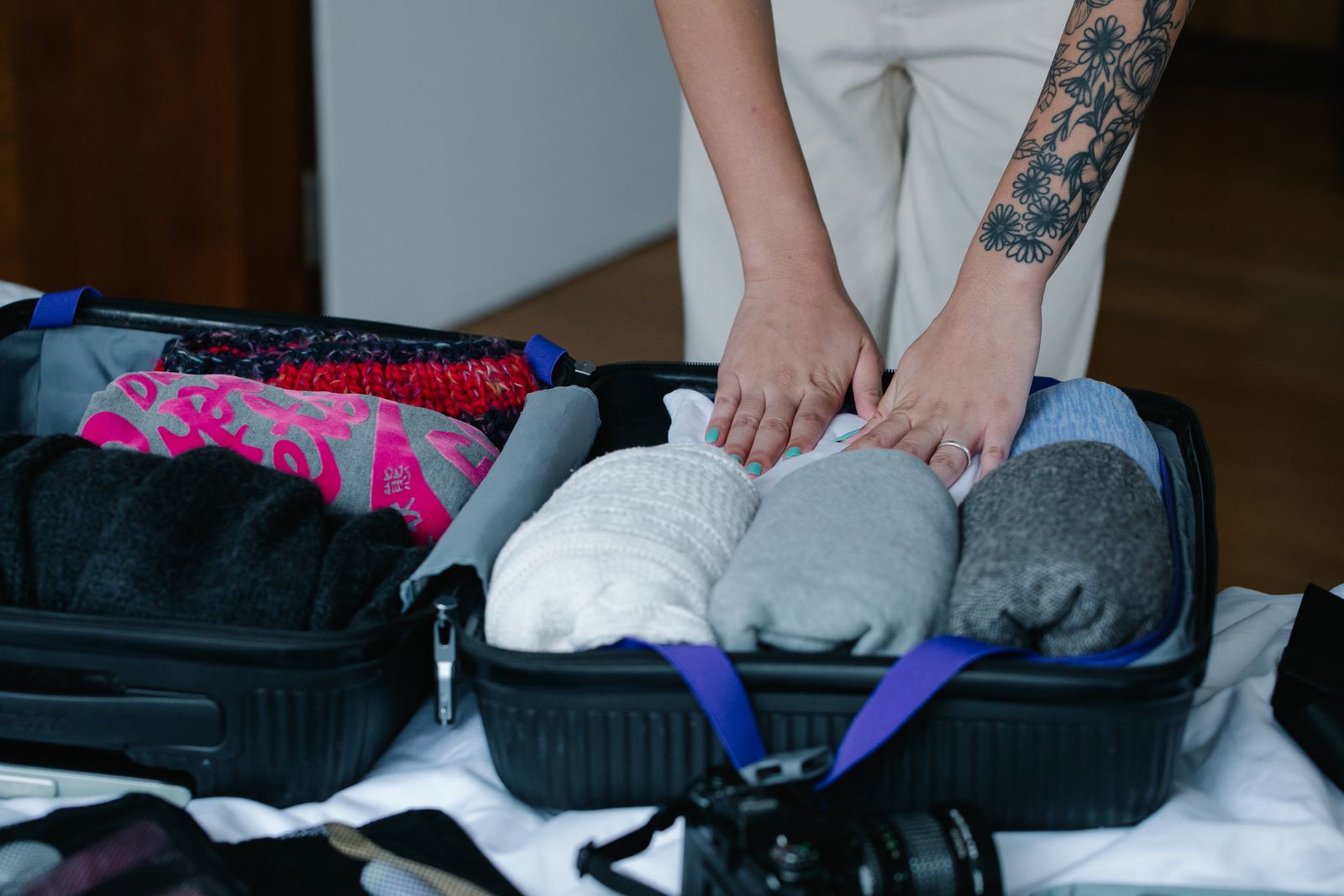
Rolling works because soft fabrics compress well and a tight roll avoids the sharp fold lines that flat folding creates. Done badly, though, rolling produces a bag of crumpled tubes.
- Lay the garment flat and smooth out wrinkles with your hands.
- For T-shirts, fold the sleeves in so the shirt becomes a neat rectangle. For trousers, fold in half lengthwise first.
- Roll tightly from the bottom (or the cuff) toward the top, keeping tension even.
- Place rolls side by side in the base of the bag, like logs, to make a flat, firm layer.
Socks and underwear can be rolled and tucked into shoes or into gaps between larger rolls. That dead space adds up quickly.
How to fold for clean lines
Folding is the right choice for anything that should look sharp when you unpack it. The key is to fold as few times as possible and to fold along existing lines.
Dress shirts
- Button the shirt, including the top button, and lay it face down.
- Fold each side and sleeve back toward the center so the body forms a long rectangle.
- Fold the bottom up once or twice, depending on your bag size.
- Turn it over and pack it near the top of the bag, where it won’t carry weight.
Trousers
Hold trousers by the cuffs so the creases fall naturally, then fold in half once along the crease. If your bag allows, lay them flat at full length and fold the legs over other items later, which is the start of the layering method below.
How to layer a bundle for tailoring
The bundle method wraps your most wrinkle-prone garments around a soft core, so nothing gets a sharp fold. It takes a few extra minutes and works best for business trips, weddings and anything involving a suit.
- Make a small core from a packing cube or pouch filled with soft items such as underwear and socks.
- Lay your jacket flat first, with the shoulders at one end of the bag and the body extending out over the edge.
- Lay trousers on top, alternating the direction of the waistband and legs.
- Add shirts on top, also alternating direction.
- Place the core in the center, then wrap each garment around it one at a time, starting with the last one you laid down and finishing with the jacket.
The result is a firm, rounded bundle where each garment curves rather than creases. Hang everything up as soon as you arrive; a few minutes in a steamy bathroom removes most remaining wrinkles.
Putting it all together in one bag
Most trips mix casual and dressier clothes. A simple order of operations keeps everything in its place:
- Bottom layer: shoes (in bags, heel toward the wheels) and tightly rolled soft clothes.
- Middle: folded trousers and knitwear, plus packing cubes if you use them.
- Top: folded dress shirts or a bundle of tailoring, where they won’t be crushed.
- Accessible pocket: your toiletry bag, chargers, and anything you need at security or on arrival.
Packing cubes aren’t essential, but they make this system easier by keeping each category together and letting you unpack into a hotel drawer in seconds. If you want a grooming kit that’s ready the moment you need it, see our guide to the dopp kit every frequent flyer should own.
Common packing mistakes
- Packing for every possible scenario. Most destinations sell what you forgot.
- Leaving gaps. Loose space lets clothes shift and crease. Fill gaps with socks, belts or a rolled scarf.
- Putting shoes on top. Heavy items should sit low and close to the wheels so the bag stays balanced.
- Folding tailoring in half. A jacket folded across the middle arrives with a crease across the back. Bundle it or use a garment folder.
- Packing the night before at midnight. Lay things out a day early so you can edit with a clear head.
For what to wear on the plane itself, read how to dress for a long-haul flight without looking like you tried too hard. Driving instead? Our road trip essentials guide covers packing a car.
Key takeaways
- Edit your list first; technique only matters once the bag isn’t overstuffed.
- Roll soft, casual fabrics.
- Fold dress shirts and trousers along their natural lines.
- Bundle suits and jackets around a soft core to avoid creases.
- Heavy items low, delicate items high, essentials within reach.
- Hang everything as soon as you arrive.
FAQ
Is rolling or folding better for saving space?
Rolling usually saves a little more space with soft clothes, and it fills awkward corners better. For structured garments, the space saved isn’t worth the wrinkles, so fold or bundle those instead.
How do I pack a suit in a carry-on?
Use the bundle method, or turn the jacket inside out, tuck one shoulder into the other, and fold it once loosely in half before laying it on top. Either way, hang it up as soon as you arrive.
Do packing cubes actually help?
They help most with organization rather than raw space. Compression cubes can shrink soft clothing, but the main benefit is keeping categories together so you can find things and unpack quickly.
Updated November 2026. Some links on this site may be affiliate links; see our editorial policy.