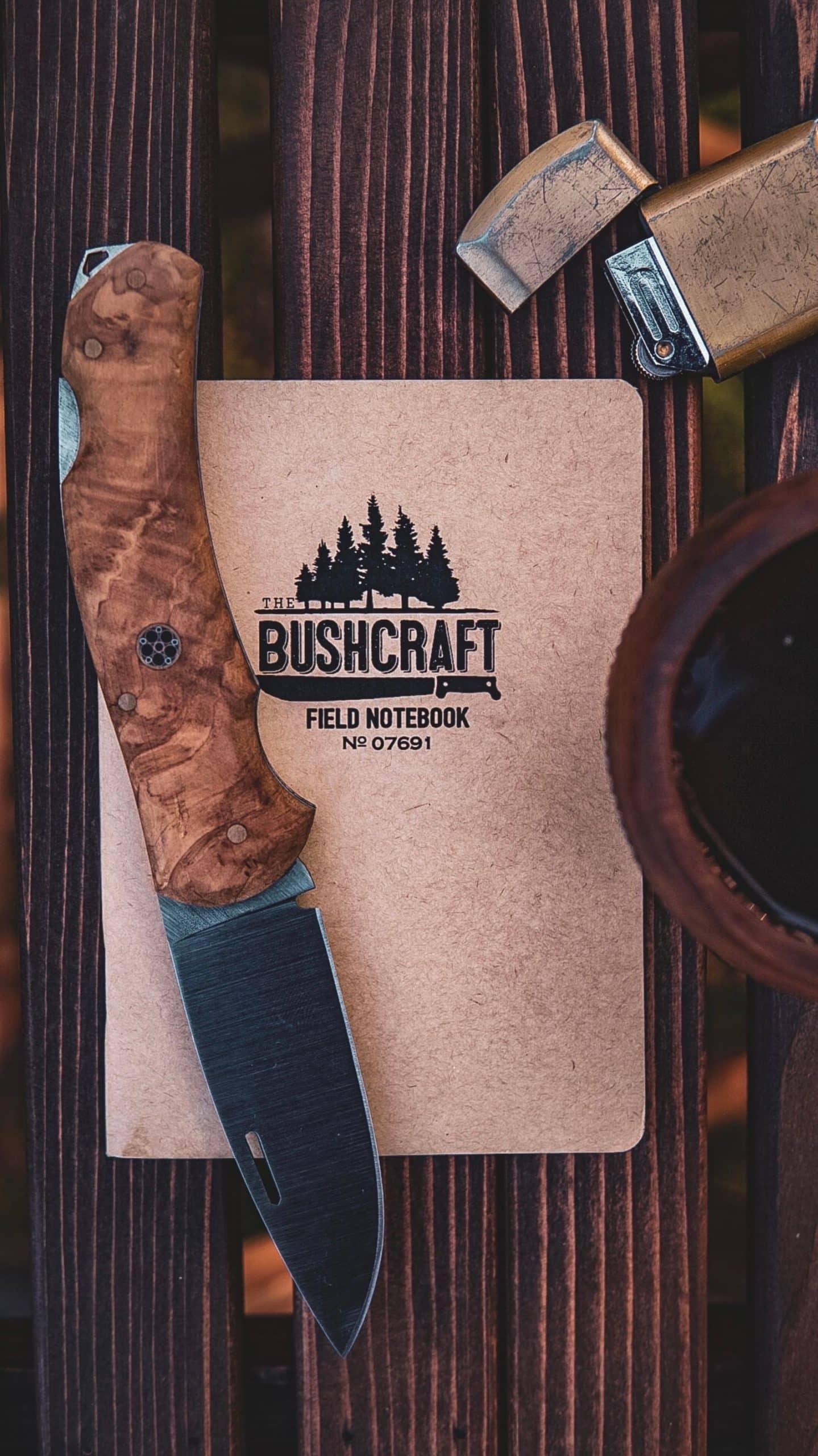
A small folding knife is one of the most useful things you can carry. It opens packages, cuts loose threads, trims a zip tie, slices an apple and handles a hundred small jobs that otherwise send you looking for scissors. Carried well, it is a tool, not a statement.
This guide covers what actually matters when you choose one: blade size and shape, steel, lock type, carry method and the law where you live. It ends with simple care habits, a few etiquette rules and a checklist you can use before you buy.

Start with what you will actually cut
Most people buy a knife for the dramatic situations they imagine and then use it for boxes, tape, string and food. Choose for the ordinary jobs. If your days involve an office, a commute and errands, you need a small, light knife that disappears in a pocket. If you work outdoors, on a job site or in a workshop, a slightly larger and tougher blade makes sense.
A useful rule of thumb: the best knife is the one you will carry every day. A heavy knife that stays in a drawer is worth less than a modest one that is always with you.
Blade length, shape and edge
Length
For everyday carry, a blade of roughly 2.5 to 3 inches covers almost everything. Shorter blades are less intimidating in public, easier to control for fine work, and more likely to fall within local legal limits. Longer blades add reach but also weight and bulk.
Shape
- Drop point: a gently curved spine meeting a strong tip. The most versatile shape and a sensible default.
- Clip point: a thinner, finer tip that is good for detail work but a little more fragile.
- Sheepsfoot or wharncliffe: a straight edge with a blunt or downturned tip. Excellent for controlled cuts on boxes and cord, and less likely to poke something by accident.
- Tanto and other aggressive shapes: strong tips, but they look tactical and are rarely the best choice for daily chores.
Plain or serrated edge
A plain edge is easier to sharpen and gives cleaner cuts. Serrations help with fibrous rope but are harder to maintain at home. For most people a fully plain edge is the better choice.
Blade steel without the jargon
Steel names can be confusing, but the trade-offs are simple. Harder steels keep an edge longer and are harder to sharpen. Softer steels dull sooner but come back quickly on a stone. Stainless steels resist rust; carbon steels take a keen edge but need to be kept dry and lightly oiled.
Budget knives often use steels such as 8Cr13MoV or 420HC, which are perfectly serviceable and easy to sharpen. Mid-range knives commonly use 14C28N, D2 or similar. Premium knives use powder steels such as S30V, S35VN or M390, which hold an edge much longer. For a daily carry knife, a well-made blade in a mid-range steel is often the sweet spot: good edge retention without making sharpening a chore.
Lock types compared
The lock is what keeps the blade from closing on your fingers. It is also where cheap knives most often feel loose or fail. Here is how the common designs compare.
| Lock type | How it works | Strengths | Things to know |
|---|---|---|---|
| Slip joint (non-locking) | A spring holds the blade open but does not lock it | Simple, light, often legal where locking blades are restricted | Can close if you push the wrong way; use with care |
| Liner lock | A thin metal liner springs behind the open blade | Common, easy one-handed closing | Quality varies; check that it engages firmly |
| Frame lock | Part of the handle itself springs behind the blade | Strong and simple | Usually heavier; handle must be metal |
| Lockback | A spine bar locks the blade from the back | Very secure, classic design | Usually needs two hands to close |
| Crossbar or button locks | A bar or button blocks the blade tang | Strong, ambidextrous, smooth | More parts; keep the mechanism clean |
Handles, clips and carry
Handle materials range from plastic and fiberglass-reinforced nylon to aluminum, titanium, wood, bone and micarta. Synthetic handles are light and tough. Metal handles feel solid but add weight. Natural materials look handsome and age well but need a little more care.
Check the pocket clip. A deep-carry clip lets the knife sit low and out of sight. A reversible clip lets you choose which pocket and which way the tip points. If you wear tailored trousers or a suit, a slim, light knife with a deep clip, or a traditional knife carried loose in a pocket, keeps your lines clean. A small leather slip helps a traditional knife avoid scratching your phone and keys.
Well-known examples worth looking at
You do not need a rare or expensive knife. These are widely available and well regarded, and they illustrate the categories above:
- Victorinox Swiss Army knives such as the Spartan or the Cadet: slip-joint multi-tools that are small, friendly-looking and endlessly useful.
- Opinel No. 8: a simple wood-handled folder with a rotating ring lock, available in carbon or stainless steel.
- Buck 110: a classic lockback with brass bolsters and a long track record.
- Spyderco Delica or Benchmade Bugout: light modern folders with pocket clips, popular for everyday carry.
Whatever you buy, buy it from an authorized retailer. Popular knives are often counterfeited, and fakes tend to have soft steel and weak locks.
From experience: I wear an IWC Pilot, an Omega Speedmaster and a Grand Seiko, and I believe in buying from makers with provenance and real technology that focus on one thing and do it well. That is a useful filter for a knife, too. A company with a long history of making blades usually has more to lose from a bad one than a brand that makes a little of everything.
Know the law before you carry
Knife laws differ by country, state and even city. Limits can apply to blade length, lock type, opening mechanism (assisted or automatic openers are treated differently in some places), and where you carry, such as schools, courthouses and government buildings. Check the current rules for your state and city before you carry, and again when you travel.
Air travel is simple: in the United States, the TSA does not allow knives in carry-on bags, apart from plastic or round-bladed butter knives. Pack your knife in checked luggage or leave it at home. Our guide to small travel gear that prevents big headaches covers what to keep in your carry-on instead.
Care that keeps it working for decades
- Wipe it after use, especially after cutting food or tape. Adhesive residue makes a blade drag.
- Keep it dry. Carbon steel especially should be dried and lightly oiled.
- Oil the pivot with a drop of light oil every few months, then work the blade open and closed.
- Sharpen little and often. A few passes on a fine stone, a guided sharpener or a strop keeps the edge alive. Waiting until it is completely dull means more work.
- Do not pry. A blade is not a screwdriver or a pry bar. Tips snap and locks get damaged.
- Check the pivot screw occasionally if your knife has one. Blade play usually means it needs a small adjustment.
If you enjoy keeping a good edge, the same skills transfer directly to the kitchen; see our guide to the chef’s knife you buy once and sharpen forever.
Pocketknife etiquette
- Open it quietly and close it with care. Flicking a blade open in a meeting or a crowded place makes people uncomfortable.
- If you are lending your knife, close it and hand it over handle first.
- Cut away from yourself and away from other people.
- In an office or someone else’s home, it is polite to offer help with the box rather than produce a blade without warning.
- Keep it clean. A grimy knife used to slice someone’s cheese is a quick way to lose the room.
Key takeaways and checklist
- Choose for everyday jobs: a blade of roughly 2.5 to 3 inches suits most people.
- A drop-point or sheepsfoot blade with a plain edge is the easiest to live with.
- Mid-range steel is the sweet spot for daily carry.
- Test the lock: it should engage firmly with no wobble.
- Pick a clip and weight you will carry every day, including with tailored clothes.
- Buy from an authorized retailer to avoid counterfeits.
- Check local and travel rules before you carry.
For the broader way to judge any purchase before you buy, see how to judge quality before you buy anything, and for another everyday-carry piece that improves with age, the wallet that ages better than you do.
Frequently asked questions
Is a Swiss Army knife good enough for everyday carry?
For many people, yes. A small Swiss Army knife handles packages, food and minor fixes, and its friendly look rarely alarms anyone. Its slip-joint blade does not lock, so use it for light tasks and keep your fingers clear of the edge.
How often should I sharpen my pocketknife?
It depends on use and steel. A quick touch-up on a fine stone or strop whenever cutting starts to feel harder than it should is better than a major session once a year.
Can I carry a pocketknife to work?
It depends on local law and your employer’s policy. Many offices are fine with a small folder used discreetly, while schools, hospitals and government buildings often prohibit knives entirely. Check before you carry.
Updated October 2026. Some links on this site may be affiliate links; see our editorial policy.