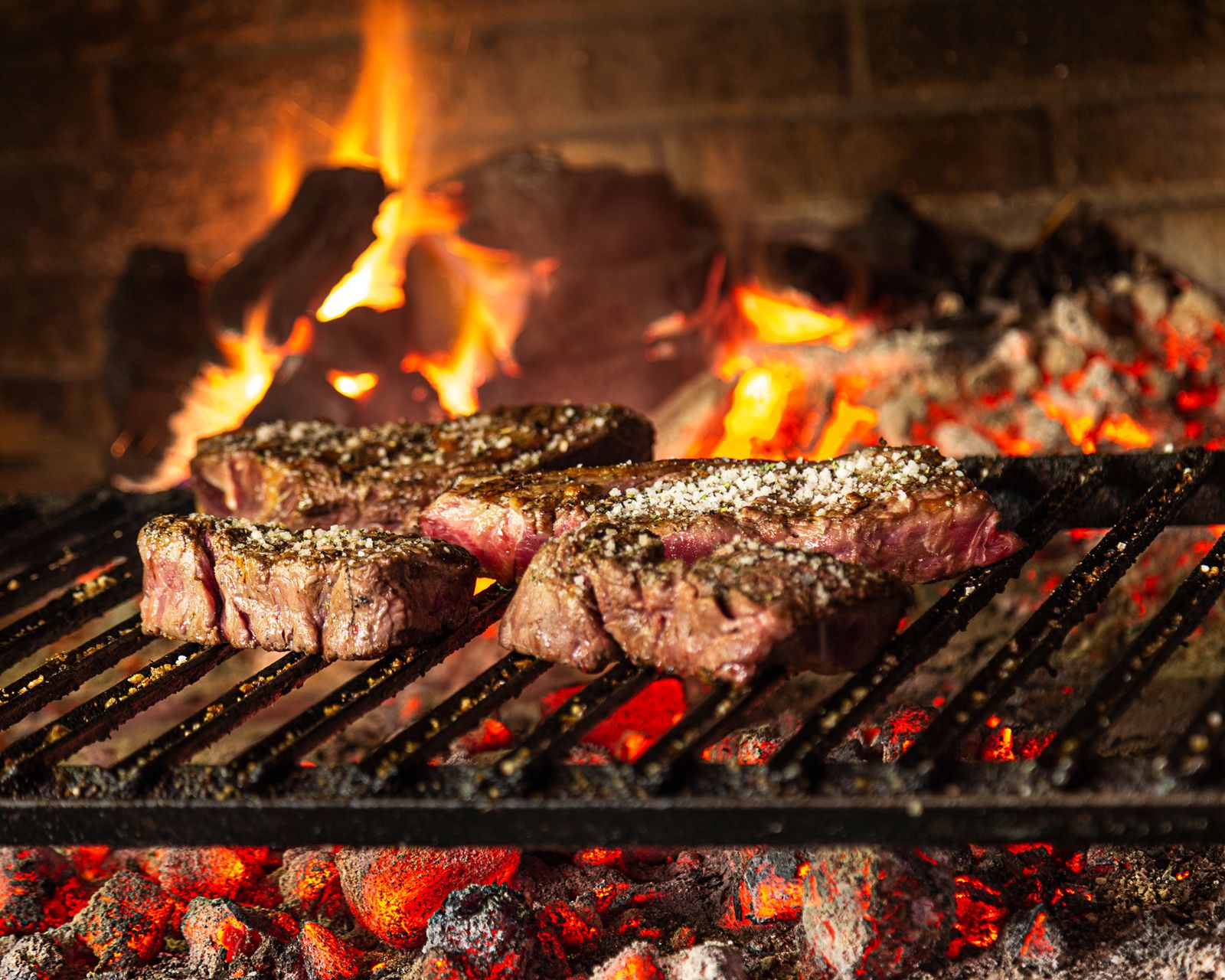
A good grill doesn’t need to be big, loaded with features or expensive. It needs to hold heat evenly, survive years of weather, and be simple enough that you’ll actually use it. Most grills that end up rusting on the curb failed on one of those three points.
This guide covers how to choose a grill that lasts, the handful of tools that earn their place, and how to look after your equipment so it keeps working season after season. If you’re new to cooking over fire, start with our beginner’s guide to grilling, smoking and cooking over fire, then come back here for the gear.
Charcoal, gas, pellet or kamado?
Each fuel type has a different character. None is “best”; the right choice depends on how often you cook, how much time you have, and what you like to make.
| Type | Strengths | Trade-offs | Good fit if you… |
|---|---|---|---|
| Charcoal kettle | High heat, smoky flavor, simple design, few parts to fail | Slower to start, more cleanup, temperature control takes practice | Enjoy the process and want great results from simple equipment |
| Gas | Fast start, easy temperature control, convenient | More parts to wear out (burners, igniters, valves), less smoky flavor | Grill on weeknights and value convenience |
| Pellet | Steady low temperatures, good for smoking, very hands-off | Needs electricity, has electronics and augers that can fail | Want to smoke ribs and brisket without tending a fire |
| Kamado (ceramic) | Excellent heat retention, versatile from searing to smoking | Heavy, ceramic can crack if dropped or mishandled | Want one grill that does almost everything and will stay in place |
If you’re unsure, a classic charcoal kettle is hard to beat for longevity. The Weber kettle design has been around for decades for a reason: it has very few parts, and almost all of them can be replaced.

What separates a grill that lasts from one that doesn’t
Material and thickness
Heavier, thicker metal holds heat more evenly and resists warping and rust. Porcelain-enameled steel, cast aluminum and good-quality stainless steel all hold up well. Be wary of thin, lightweight stainless that flexes when you press on it; not all stainless steel is equal, and lower grades can still rust.
Grates
Cast iron grates hold heat and give strong sear marks but need oiling to prevent rust. Heavy stainless steel grates are lower maintenance. Thin, plated wire grates are the first thing to fail on budget grills.
Fit and finish
Lift the lid and check how it seats. Gaps let heat and smoke escape and make temperature control harder. Look at the welds, hinges and wheels. Wobbly legs and stamped-tab assemblies are signs the rest of the grill was built to a price.
Parts availability
Burners, igniters, grates and thermometers all wear out eventually. A grill from a maker that sells replacement parts for older models can be kept running for many years. If you can’t find parts for a model that’s a few years old, that tells you something.
From experience: In more than 20 years of helping people find quality goods, I’ve noticed that many brands share the same manufacturers, and high-end branded goods are often made by the same people who make discount ones. That’s why I look at the construction rather than the badge. Two grills from different brands can be close to identical underneath, and the one with better parts support is the better buy.
The tools worth owning
You can spend a lot on grilling accessories. Most of them aren’t necessary. These are the ones that genuinely improve results:
- An instant-read thermometer. The single most useful tool. It removes the guesswork from doneness and is far more reliable than the dial on the lid, which measures air temperature, not your food.
- Long, sturdy tongs. Spring-loaded stainless tongs about 16 inches long keep your hands away from the heat.
- A wide, stiff spatula. For burgers and fish. Look for a thin front edge and a solid riveted or welded handle.
- A chimney starter if you cook with charcoal. It lights coals evenly without lighter fluid.
- A good grill brush or scraper. Choose one carefully; a wooden scraper or a bristle-free brush avoids the risk of loose wire bristles ending up in food.
- Heat-resistant gloves for moving grates, chimneys and hot cast iron.
A sharp knife matters too, both for prep and for carving. Our guide to the pocketknife every man should carry covers blade steels and care that apply to kitchen knives as well.
Nice to have, once you know you’ll use them
- A cast iron skillet or griddle for vegetables, smash burgers and anything that would fall through the grates.
- A leave-in probe thermometer for long, slow cooks so you don’t have to keep opening the lid.
- A basic smoker box or wood chunks to add smoke flavor on a gas or charcoal grill.
Skip gadgets like branded grill sets in a carrying case. They tend to be thin, flimsy versions of tools you can buy individually in far better quality.
How to make your grill last
- Clean the grates while they’re hot, right after cooking or during preheat.
- Empty ash regularly. Wet ash is corrosive and eats through the bottom of charcoal grills.
- Oil cast iron grates lightly after cleaning to prevent rust.
- Check gas lines and connections at the start of each season. A soapy-water test on the connections will reveal leaks as bubbles.
- Use a breathable cover and let the grill cool and dry before covering it, so moisture isn’t trapped inside.
- Deep-clean once or twice a year: scrape the inside of the lid and firebox, clear grease trays, and inspect burners.
Always grill outdoors in a well-ventilated area, away from the house, overhangs and anything flammable. Never use a charcoal or gas grill in a garage or enclosed space.
Quick buying checklist
- Fuel type matches how often and how you cook.
- Heavy, rigid body and lid that seats without large gaps.
- Solid grates (cast iron or heavy stainless).
- Sturdy legs, wheels and welds.
- Replacement parts available from the maker.
- A size that fits your usual cook, not your biggest party.
Once you’re set up, grilling is one of the easiest ways to feed a crowd. For the hosting side of things, see hosting houseguests with genuine grace.
FAQ
Is a more expensive grill always better?
No. Price often reflects features, size and brand rather than durability. A simple charcoal kettle can outlast a feature-heavy gas grill. Judge the materials, construction and parts support instead.
How big a grill do I need?
Enough cooking area for what you make most weeks, plus a little room to move food between hot and cooler zones. Buying for the one big party a year usually means heating and cleaning more grill than you need the rest of the time.
Charcoal or gas for a beginner?
Either works. Gas is easier to control and quicker on weeknights. Charcoal takes a bit more practice but is simpler mechanically and gives more smoky flavor. Choose the one you’re more likely to use often.
Updated November 2026. Some links on this site may be affiliate links; see our editorial policy.