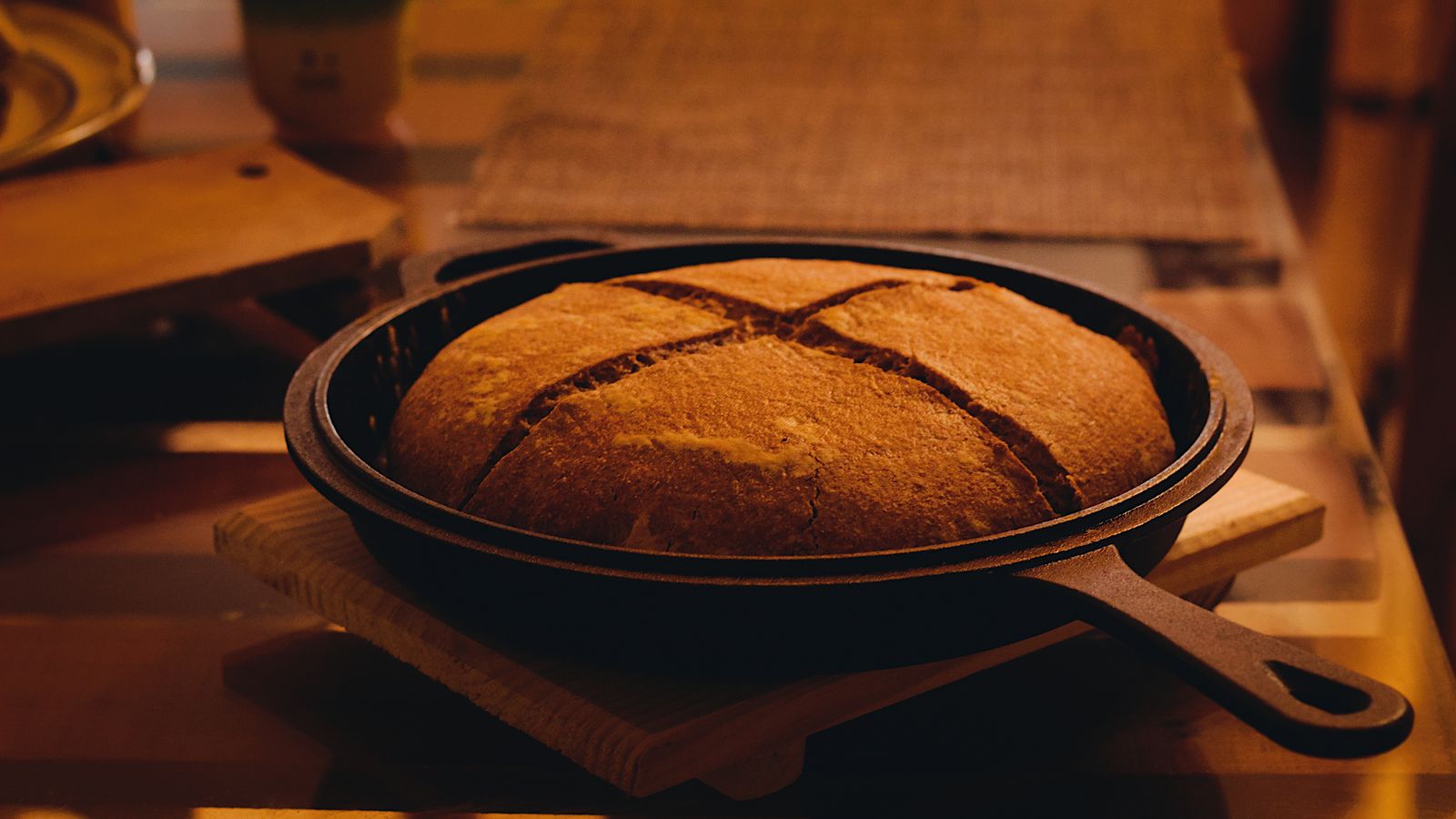
A cast iron skillet is one of the few kitchen tools that can outlast its owner. It is cheap compared with most quality cookware, nearly impossible to ruin permanently, and it does several jobs better than anything else in the kitchen: searing steak, baking cornbread, roasting vegetables and going straight from stovetop to oven.
It also has a reputation for being fussy. Most of that comes from outdated advice. This guide covers what cast iron does well, how to choose a pan, how seasoning actually works and the simple routine that keeps it in good shape for decades.

What cast iron is good at, and where it falls short
Cast iron heats slowly and unevenly at first, but once hot it holds that heat very well. That makes it excellent for anything that needs a hard, steady sear, and less ideal for delicate, fast-changing cooking.
- Strengths: searing meat, shallow frying, roasting, baking bread and cornbread, cooking over a grill or campfire, and going from stove to oven.
- Weaknesses: it is heavy, the handle gets very hot, it reacts with acidic foods over long cooking times, and it takes a few minutes to preheat evenly.
If you cook over fire, cast iron is especially useful. Our beginner’s guide to cooking over fire covers how to use it on a grill.
Bare cast iron vs. enameled cast iron
Both are made of cast iron, but they behave differently in the kitchen and need different care.
| Bare cast iron | Enameled cast iron | |
|---|---|---|
| Surface | Seasoned with baked-on oil | Glass enamel coating |
| Best for | Searing, frying, baking, grilling | Braises, stews, soups, sauces |
| Acidic foods | Fine for short cooking; avoid long simmers | Fine |
| Care | Dry promptly, oil lightly | Wash like normal cookware; avoid chipping |
| Cost | Low to moderate | Moderate to high |
| Lifespan | Can last generations; damage is usually fixable | Long, but chipped enamel can’t be fully repaired |
Most people start with a bare 10- or 12-inch skillet and add an enameled Dutch oven later for soups and braises.
How to choose a pan
Size
A 10-inch skillet suits one or two people. A 12-inch pan is the most versatile size for a household, though it is noticeably heavier. If you can only have one, the 12-inch is usually the better choice.
New or vintage
New pans from widely available makers such as Lodge come pre-seasoned and are ready to use. Their cooking surface is often slightly pebbly, which smooths out with use. Vintage American pans, such as older Griswold and Wagner pieces, are known for smoother, lighter castings and are sought after by collectors.
When buying used, check that the pan sits flat on a level surface without rocking, and look for cracks, especially around the rim and handle. Surface rust is cosmetic and can be removed. A crack or a warped base cannot be fixed.
Handle and features
Look for a helper handle on the opposite side if you are buying a 12-inch pan, since it makes lifting a full pan safer. Pour spouts are useful for draining fat. A matching lid is helpful but not essential.
From experience: For over 20 years I’ve helped people find quality branded clothing and outfitter goods, and the lesson that keeps coming back is simple: quality items last and hold their resale value if you ever lose interest. Fast fashion is a short-term fix with little ongoing value. Cast iron is a good example of the quality side of that equation; a well-kept pan is still useful decades later.
How seasoning works
Seasoning is a thin layer of oil that has been heated past its smoke point until it bonds to the iron and hardens. It protects the pan from rust and gives it a naturally slick surface. Every time you cook with a little fat, you add to it.
To season or re-season a bare pan in the oven:
- Wash and dry the pan completely, then warm it briefly on the stove to drive off any moisture.
- Rub a very thin layer of neutral cooking oil over every surface, inside and out.
- Wipe it off with a clean cloth as if you made a mistake. Too much oil leaves a sticky finish.
- Bake the pan upside down in a hot oven for about an hour, then let it cool in the oven.
- Repeat two or three times for a durable base layer.
Cooking regularly does the rest. Fried foods, roasted vegetables and anything with a little fat help build the surface over time.
Everyday care in five minutes
- Clean while warm: rinse with hot water and scrub with a brush or chain-mail scrubber. A small amount of mild dish soap is fine on a well-seasoned pan.
- Avoid soaking: standing water causes rust. Never put bare cast iron in the dishwasher.
- Dry completely: towel-dry, then warm it on the stove for a minute to evaporate the last of the moisture.
- Oil lightly: wipe a few drops of oil over the cooking surface and buff off the excess.
- Store dry: keep it somewhere with airflow. If you stack pans, put a paper towel between them.
Fixing common problems
- Rust spots: scrub the rust away with steel wool, rinse, dry thoroughly and re-season.
- Sticky surface: too much oil was left on. Bake the pan upside down in a hot oven for an hour to finish curing it.
- Food sticking: usually not enough preheat or not enough fat. Heat the pan gradually and add oil before the food.
- Flaking black bits: old, carbonized buildup. Scrub it off and re-season.
Because almost every problem can be fixed, cast iron fits the buy-it-for-life approach better than most kitchen gear. The same is true of the outdoor equipment covered in how to grill like you mean it.
Key takeaways
- Start with a 10- or 12-inch bare skillet; add enameled cast iron later for braises.
- Check used pans for a flat base and no cracks; ignore surface rust.
- Seasoning is baked-on oil. Thin coats work; thick coats get sticky.
- Clean warm, dry completely, oil lightly, store dry.
- Rust and stickiness are fixable. Cracks and warping are not.
Frequently asked questions
Can I use soap on cast iron?
Yes, in small amounts. Modern dish soaps are mild, and a properly seasoned surface is baked-on polymerized oil, not a coating that soap strips away. What damages cast iron is soaking, the dishwasher and leaving it wet.
Can I cook tomato sauce in cast iron?
A quick tomato dish in a well-seasoned pan is usually fine. Long simmers with acidic ingredients can wear down seasoning and give food a metallic taste. Use enameled cast iron or stainless steel for those.
Is cast iron safe on glass or induction cooktops?
Cast iron works on induction because it is magnetic. On glass and ceramic tops, lift the pan rather than sliding it, since its weight and rough base can scratch the surface. Check your cooktop manufacturer’s guidance.
Updated November 2026. Some links on this site may be affiliate links; see our editorial policy.