Most furniture sold today is not what it looks like. A desk that appears to be oak may be a photo of oak printed on paper and glued to compressed wood chips. That is not automatically a problem, but it changes how long the piece will last, how it handles moving day, and whether it can ever be repaired.
This guide explains the main materials, how to identify them in a few minutes, and how to decide where real wood is worth the money and where it isn’t.

The four materials you will actually see
Solid wood
Every part you can see is cut from boards of real timber. Hardwoods such as oak, walnut, maple, cherry, ash and teak are dense and resist dents. Softwoods such as pine are lighter, cheaper and dent more easily, but still last for generations with reasonable care. Solid wood can be sanded and refinished several times, which is a big reason old pieces survive.
Wood veneer over plywood or MDF
A thin slice of real wood is glued over a stable core. This is not a cheap trick: a lot of well-regarded mid-century and contemporary furniture is veneered, because veneer allows matched grain and resists the seasonal movement that can crack wide solid panels. Quality depends on the core and the thickness of the veneer. Thin veneer can only be lightly sanded, if at all.
Particleboard (chipboard)
Wood chips and sawdust bonded with resin and pressed into sheets, then covered with a laminate, melamine or printed foil. It is inexpensive and flat, which is why it dominates flat-pack furniture. Its weaknesses are well known: it swells and crumbles when it gets wet, screws strip out of it easily, and it sags under sustained load over long spans.
MDF (medium-density fiberboard)
Finer wood fibers pressed with resin into a dense, smooth board. It paints well and machines cleanly, so it is common in cabinet doors and painted furniture. It is heavier and stronger than particleboard but shares the same problems with water and repeated screwing.
How to tell what you are looking at
You can usually identify the material in under five minutes with these checks:
- Look at the edges. On solid wood, the grain wraps around corners and you can see end grain at the ends of boards. A thin strip of edge banding or a pattern that suddenly stops at the edge points to a covered panel.
- Compare the top and the edge pattern. On printed foil, the “grain” repeats in an identical pattern. Real wood never repeats exactly.
- Open a drawer. Dovetail or finger joints, solid drawer sides and drawers that run on wooden runners or metal slides suggest care in construction. Stapled sides and a drawer bottom made of thin hardboard suggest the opposite.
- Check the back and underside. Unfinished surfaces show the core material. Particleboard has a visible speckled texture; plywood shows stacked layers; solid wood shows continuous grain.
- Lift a corner. Particleboard and MDF are heavy for their size, but solid hardwood pieces are heavy too. Weight alone tells you little; combine it with the other checks.
- Read the listing closely. “Solid wood” should mean exactly that. Phrases like “wood finish,” “wood effect,” “engineered wood” or “solid wood and wood composites” mean some or all of the piece is composite.
For a broader version of this method that works on clothing, shoes and electronics too, see how to judge quality before you buy anything.
Side-by-side comparison
| Material | Strengths | Weaknesses | Can it be refinished? |
|---|---|---|---|
| Solid hardwood | Durable, repairable, ages well, holds resale value | Higher cost, moves with humidity | Yes, multiple times |
| Veneer over plywood | Stable, attractive matched grain, lighter | Quality varies with veneer thickness and core | Lightly, with care |
| MDF | Smooth, paints well, flat | Heavy, swells when wet, weak screw holding | Paint only |
| Particleboard with laminate | Cheapest, light enough for flat-pack shipping | Swells and crumbles when wet, sags, hard to repair | No |
Formaldehyde and indoor air
Composite boards are made with resins, and some resins release formaldehyde, especially when new. In the United States, composite wood products such as particleboard, MDF and hardwood plywood must meet emission limits under the federal TSCA Title VI rule, which was modeled on California’s CARB standards. Look for a compliance label or a statement in the product listing. Airing out new furniture in a ventilated room for a few days is a sensible habit with any new piece.
Why real wood often costs less over time
A solid wood desk or dresser can cost several times as much as a flat-pack equivalent. The difference narrows once you account for lifespan. Composite furniture tends to loosen at the joints after a move or two, and once a screw hole strips or a corner gets wet, repairs are rarely worth it. Solid wood can be reglued, tightened and refinished, and good pieces sell easily secondhand.
That is the same logic behind cost per wear and cost per use: divide the price by the years of service, not just the number on the tag.
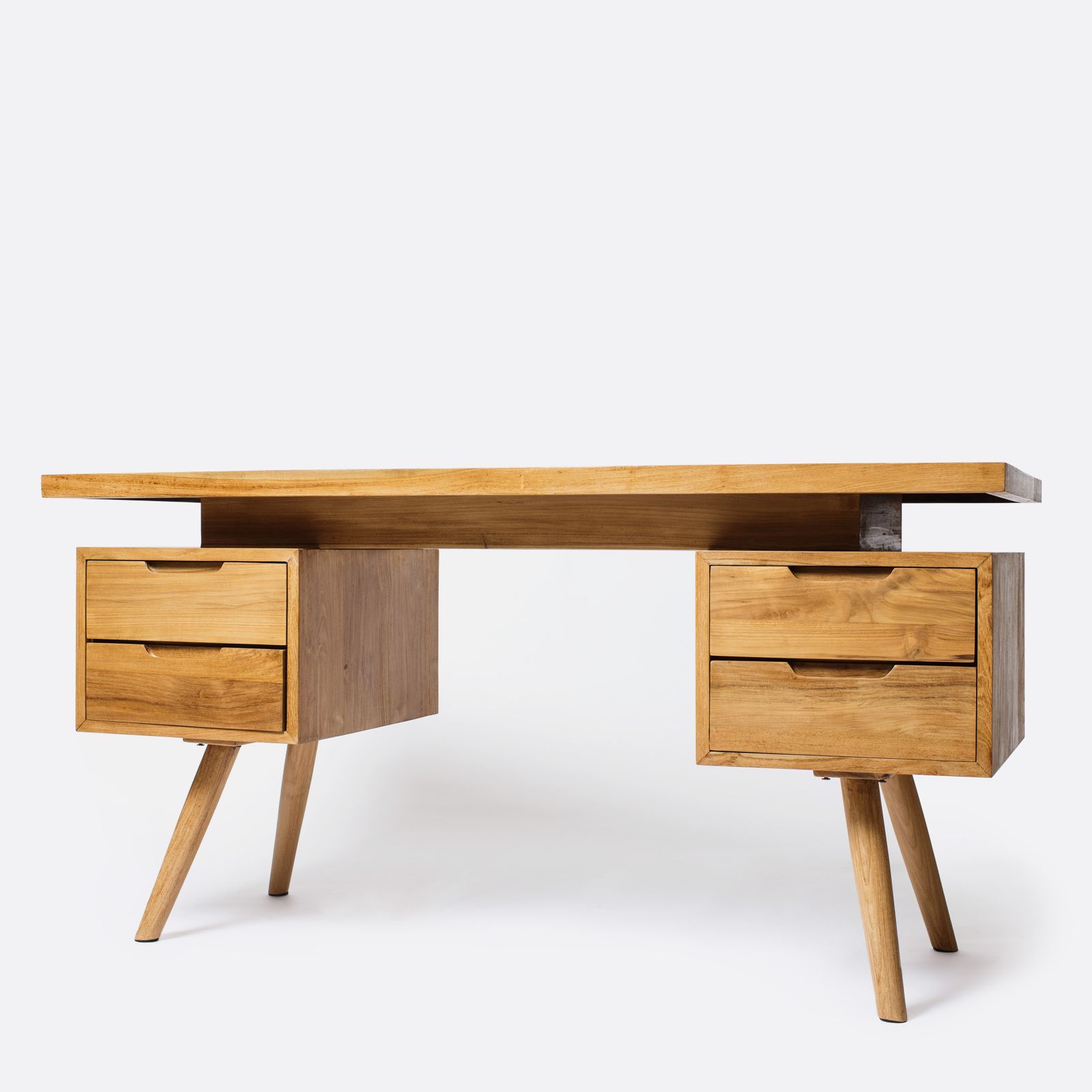
From experience: I’ve had teak furniture made in Bali, and I look at furniture the way I look at clothing after more than 20 years in that business. Quality items last and hold their value when your taste changes. The cheap version is a short-term fix with little value once you are done with it.
When particleboard is the sensible choice
Real wood is not always the right call. Composite furniture makes sense when:
- You expect to move often, or the piece will not survive the next move anyway.
- It is for a child’s room or a short-term rental you will furnish differently later.
- It is hidden structure, such as the carcass of a closet system, where a stable flat panel matters more than appearance.
- The budget is tight and the alternative is going without something you need now.
In those cases, buy the best composite piece you can, keep it away from water, and avoid repeatedly disassembling it.
Getting real wood on a realistic budget
- Buy secondhand. Estate sales, auctions and local marketplaces are full of solid wood dressers, tables and bookcases from decades past, often for less than new flat-pack furniture.
- Prioritize high-use pieces. A dining table, desk and bed frame take the most wear. Side tables and shelving can wait.
- Consider unfinished or simple pieces. Plain solid pine or oak furniture finished at home costs less than designer pieces and lasts just as long.
- Learn basic care. Coasters, felt pads, occasional oil or wax for oiled finishes, and keeping pieces away from radiators and direct sun prevent most damage. If you enjoy the hands-on side, weekend woodworking makes small repairs easy.
Key takeaways
- Check edges, drawers and the underside before trusting the label.
- Good veneer is not a red flag; printed foil over particleboard usually is.
- Solid wood can be repaired and refinished, which is why it lasts and resells.
- Use composite furniture where its limits do not matter, and spend on the pieces you use every day.
FAQ
Is engineered wood the same as solid wood?
No. “Engineered wood” covers plywood, MDF, particleboard and similar products made from wood layers or fibers bonded with adhesive. Some engineered products, like quality plywood, are excellent; the term alone does not tell you which you are getting.
Is veneer furniture worth buying?
Often, yes. Veneer over a plywood or quality core is stable and attractive. Check the veneer thickness if possible and look at the edges and joinery as you would with solid wood.
Can you fix water-damaged particleboard?
Small chips can be filled, but swollen particleboard does not return to its original shape or strength. Replacing the panel is usually the only real fix.
Updated November 2026. Some links on this site may be affiliate links; see our editorial policy.