Taste sounds like something you either have or you don’t. In practice, it’s mostly a trained eye: the ability to look at a jacket, a chair or a pair of boots and tell, fairly quickly, whether it’s well made, whether it suits you and whether you’ll still want it in ten years. Like any skill, it improves with deliberate practice.
This guide breaks taste down into parts you can actually work on. None of it requires spending a lot of money. Most of it requires paying attention.
What “taste” actually means for everyday purchases
When people talk about someone having good taste in clothes or furniture, they usually mean three separate things that happen to show up together:
- Quality judgment: recognizing good materials and construction, and noticing shortcuts.
- Proportion and fit: seeing whether something is the right size, shape and scale for the person or room it’s meant for.
- Restraint: knowing when to stop. A well-chosen outfit or room rarely has too many things competing for attention.
You can work on each of these separately. Quality judgment comes from handling things. Proportion comes from comparing. Restraint comes from editing what you already own.

Step 1: Handle good things, even if you’re not buying
The fastest way to calibrate your eye is to touch and examine well-made objects. Visit a good menswear store, a furniture showroom, a cobbler or a vintage shop and look closely. You don’t have to buy anything. You’re building a reference library in your head.
Pay attention to things you can feel and see:
- Weight and density. Good fabric, leather and wood usually feel substantial for their size.
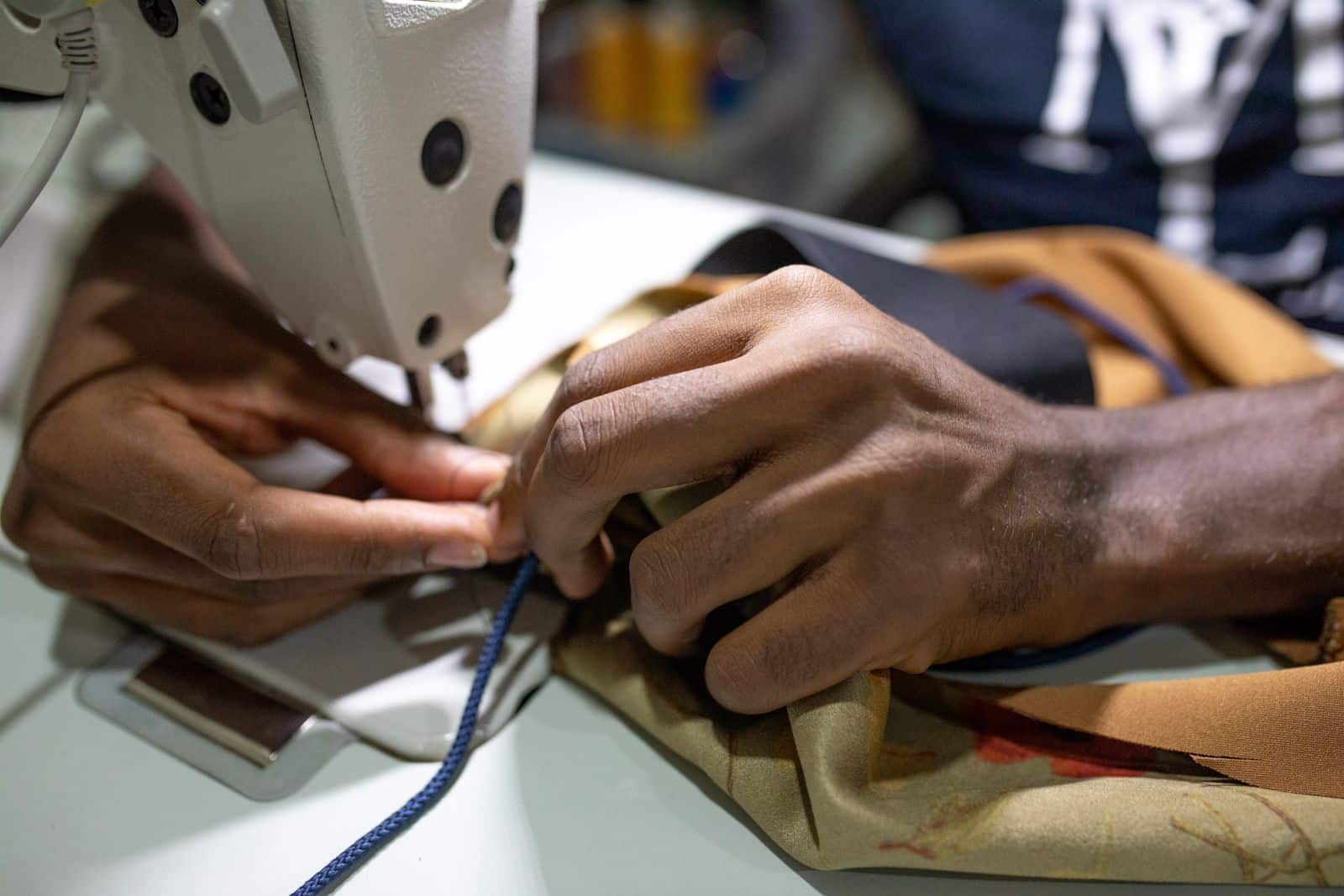
- Edges and seams. Stitching should be small, even and straight. Edges should be finished, not raw or glued over.
- How parts join. On furniture, look for real joinery rather than staples. On shoes, look at how the sole attaches to the upper.
- Hardware. Zippers, buttons and hinges are where cheaper products cut costs first.
Then do the same with inexpensive versions of the same item. The contrast teaches you more than either one alone. For a detailed checklist of what to examine, see our guide on how to judge quality before you buy anything.
From experience: The oldest piece of clothing I still own is a Christian Dior tuxedo from the 1980s, and it’s still in great condition. Over the years my style has gotten simpler and less about brands. What I notice now is the material, the workmanship and how a piece feels when I wear it.
Step 2: Learn the vocabulary
Knowing the names of things makes you notice them. Once you know what a Goodyear welt is, you’ll start checking shoe soles. Once you know the difference between full-grain and corrected-grain leather, you’ll read product descriptions differently.
A few terms worth learning early:
| Category | Terms to know | Why it matters |
|---|---|---|
| Leather | Full-grain, top-grain, corrected grain, vegetable-tanned | Tells you how much of the original hide survives and how it will age |
| Shoes | Goodyear welt, Blake stitch, cemented sole | Determines whether the shoe can be resoled |
| Fabric | Fiber content, weave, weight (oz or gsm) | Predicts durability, drape and how it handles washing |
| Furniture | Solid wood, veneer, mortise-and-tenon, dovetail | Separates pieces that last decades from ones that loosen in a few years |
| Tailoring | Canvassed, fused, shoulder construction | Affects how a jacket holds its shape over time |
You don’t need to become an expert in every category. Pick the one you buy most often and start there.
Step 3: Study things that have already aged
New products all look good in photos. The real test is how something looks after years of use. That’s why vintage stores, flea markets and secondhand listings are such good classrooms. You can see, side by side, which materials developed character and which ones simply wore out.
Look for patterns. Leather that was good to begin with tends to darken and soften. Cheap coated leather tends to crack and peel. Solid wood can be refinished; particleboard swells and crumbles once the surface is damaged. Natural fibers often pill less and wear more gracefully than low-grade synthetics, though good technical fabrics are an exception.
This is also how you learn which styles stay relevant. Pieces that look dated after five years usually had one exaggerated feature: an unusual lapel width, a loud logo, an extreme silhouette. Pieces that still look right tend to have moderate proportions and simple lines.
Step 4: Notice proportion and fit
Even very well-made things look wrong if the proportions are off. A jacket with sleeves that are too long, a sofa that overwhelms a small room, a watch that’s too large for your wrist: these are proportion problems, and they’re easy to fix once you start noticing them.
- Clothing: shoulders should fit without alteration, since that’s the hardest part to change. Most other issues, like sleeve and trouser length, are routine tailoring jobs.
- Furniture: measure the room and mark out the footprint before buying. Leave clear walkways.
- Accessories: scale them to your frame. A belt, watch or bag should look like it belongs to you rather than wearing you.
A useful exercise: when someone looks put-together, try to identify exactly why. Often it’s fit and proportion, not anything expensive.
Step 5: Edit what you already own
Restraint is the part of taste most people skip. Go through your closet or a room and ask of each item: Do I use this? Does it fit? Is it in good condition? Would I buy it again today?
The items that pass tell you what your taste actually is. The ones that fail are lessons. If you find several things you bought on impulse and never wore, that’s a pattern worth knowing about before your next purchase.
This approach pairs well with the buy-it-for-life mindset: fewer things, chosen more carefully, maintained properly.
Step 6: Slow down your buying
Taste develops between purchases, not during them. A simple waiting period does a lot of work:
- When you want something, write it down instead of buying it.
- Wait a set period. Two weeks works well for most non-essential purchases.
- During that time, look at a few alternatives and read critical reviews.
- If you still want it and it passes your quality checks, buy it.
Many items won’t survive the waiting period. The ones that do are usually the ones you’ll keep.
Step 7: Maintain things, and watch how they change
Caring for good things teaches you a lot about why they’re good. Polishing leather shoes, oiling a wooden cutting board or having boots resoled shows you which materials respond to care and which don’t. A good cobbler, tailor or furniture restorer is also an excellent teacher; most are happy to explain what they look for. Our piece on working with a cobbler covers that relationship in more detail.
From experience: I’ve had suits made in Thailand, cashmere coats made in Beijing and teak furniture made in Bali. Working directly with the people who make things is one of the best ways to learn what good work looks like.
Common mistakes when developing taste
- Equating price with quality. Some expensive items are mostly branding. Some modestly priced ones are excellent.
- Copying someone else’s look wholesale. Borrow principles, not entire outfits or rooms.
- Chasing rare or obscure items. Taste isn’t about owning what no one else has. It’s about choosing well.
- Buying too much too fast. A few good purchases teach you more than a closet full of experiments.
Key takeaways
- Taste is a trainable skill made of quality judgment, proportion and restraint.
- Handle well-made things often, even when you’re not shopping.
- Learn the vocabulary for the categories you buy most.
- Study how things age by looking at secondhand and vintage goods.
- Edit what you own and slow down new purchases.
Frequently asked questions
Can you develop good taste on a small budget?
Yes. Most of the work is looking, comparing and editing, which costs nothing. Secondhand shopping is also one of the best ways to own well-made things for less.
How long does it take to develop an eye for quality?
It depends on how often you practice. Many people notice a real difference within a few months of deliberately examining products and reading about construction in one category.
Is good taste just personal preference?
Partly. Color and style choices are personal. But fit, proportion, materials and construction are not purely subjective, and those are the parts most people can learn to judge well.
Updated October 2026. Some links on this site may be affiliate links; see our editorial policy.