A strap changes a watch more than most people expect. The same watch can look formal on black leather, sporty on a steel bracelet and relaxed on a fabric NATO. Straps also wear out at very different rates: some get better with age, some need replacing every year or two, and some will outlast the watch’s next service.
This guide compares the main strap types, explains how each one ages, and covers the practical details (lug width, spring bars, fit and care) that make swapping straps easy.

The short version
| Strap type | How it ages | Best for | Weak spots |
|---|---|---|---|
| Leather | Softens and develops patina; eventually wears out | Office, dinners, formal wear | Water, sweat and heat shorten its life |
| Metal bracelet | Very durable; picks up fine scratches | Daily wear, sports watches, travel | Stretch at the links; can pinch arm hair |
| NATO / fabric | Fades and frays slowly; cheap to replace | Casual wear, summer, outdoor activity | Bulk under the watch; looks casual |
| Rubber / FKM | Stays largely unchanged if good quality | Swimming, exercise, hot climates | Cheap silicone can crack or attract lint |
Leather: the classic that needs the most care
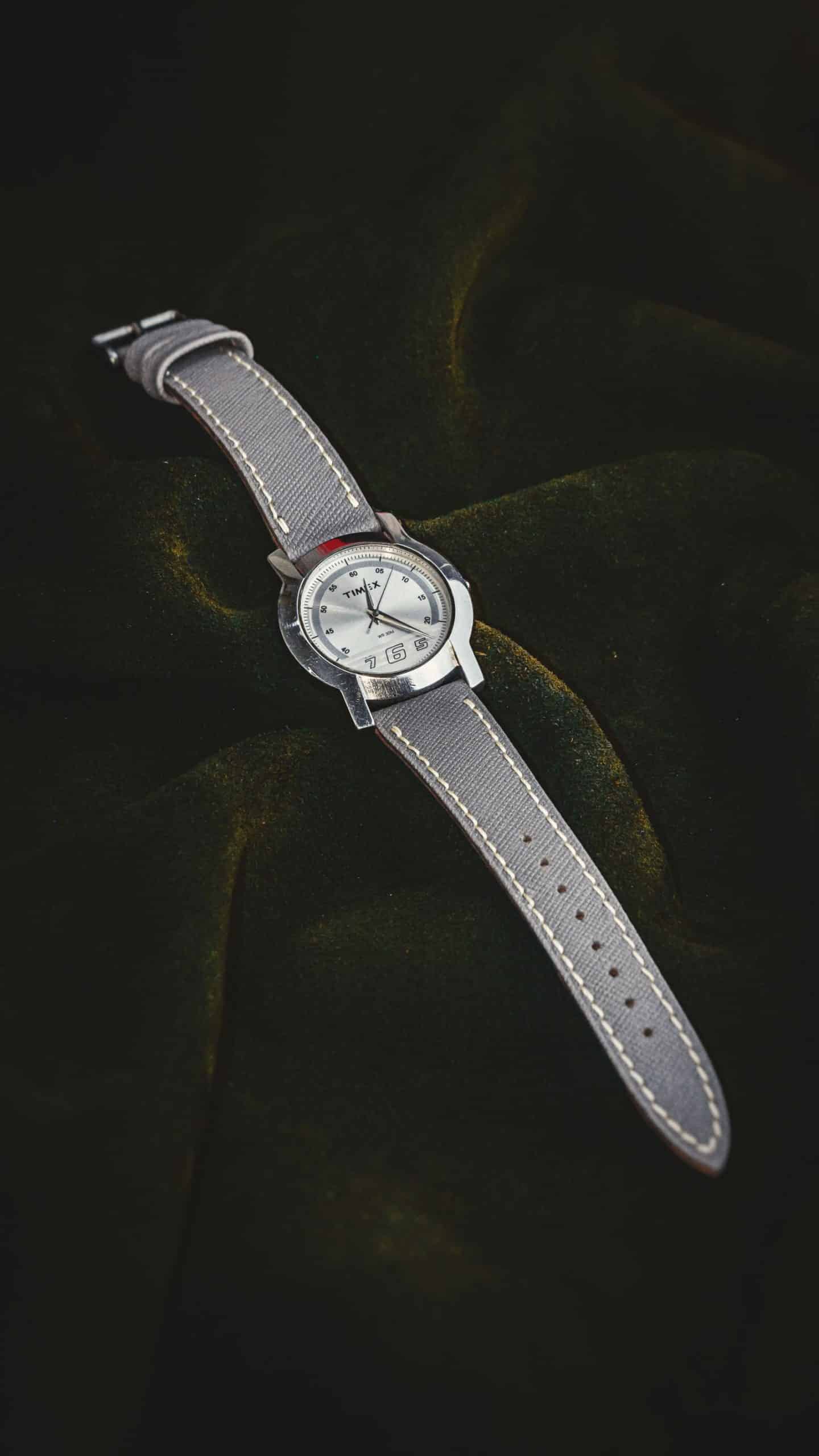
A good leather strap is the most versatile option for dress and business wear. Over time it molds to your wrist, softens and darkens slightly. That aging is part of the appeal, but leather is also the least tolerant of water and sweat, so even a well-made strap is a consumable part rather than a lifetime one.
What to look for
- Full-grain leather rather than corrected or bonded leather, which can peel at the edges.
- Finished edges: neatly painted or folded edges hold up better than raw cut edges.
- Stitching that is even and tight. Contrast stitching is more casual; matching stitching is dressier.
- A taper from the lugs to the buckle, which looks more refined and sits more comfortably.
Match a leather strap to your shoes and belt when you can: black with black, brown with brown. Our guide to a belt you buy once covers the same leather quality checks.
Metal bracelets: the most durable everyday choice
A steel bracelet is the strap for people who want to put a watch on and forget about it. It handles water, sweat and heat, and it usually lasts as long as the watch. Over years it picks up fine scratches, which some owners like and others have polished out during a service.
What separates a good bracelet from a cheap one
- Solid links and solid end links feel heavier and stretch less than folded or hollow links.
- Screwed links are easier to size and service than friction pins.
- A clasp with micro-adjustment lets you loosen or tighten the fit slightly as your wrist changes through the day.
- No sharp edges along the links or clasp, which can snag sleeves.
NATO and fabric straps: casual, cheap and hard-wearing
A NATO strap is a single length of woven nylon that threads under the watch and through both spring bars. Its name comes from the NATO Stock Number under which the British Ministry of Defence catalogued an early version for its forces. Its main advantage is security: if one spring bar fails, the watch stays on the strap. It also dries quickly, is inexpensive and comes in endless colors and stripes.
The trade-offs are that it adds a layer of fabric under the watch, making it sit higher on the wrist, and that it always looks casual. Similar fabric options include single-pass straps (which don’t add the extra layer) and woven elastic straps.
Rubber and FKM: for water and heat
Rubber straps suit dive watches, sport watches and hot, humid climates. Quality matters: FKM (fluoroelastomer) and vulcanized rubber resist heat, sweat and UV far better than inexpensive silicone, which can tear, discolor or collect lint. A good rubber strap is also one of the most comfortable options for exercise.

The practical details: lug width, spring bars and fit
Measure your lug width
Lug width is the gap between the two lugs where the strap attaches, measured in millimeters. Common sizes are 18, 20 and 22 mm, but check your watch’s specifications or measure carefully with a ruler or calipers. A strap that is even 1 mm too narrow will leave a visible gap and can shift; one that’s too wide won’t fit.
Spring bars and quick-release straps
Most straps attach with spring bars, small spring-loaded pins that sit in holes in the lugs. A spring-bar tool (an inexpensive forked tool) makes swapping straps simple, but go slowly to avoid scratching the case. Many aftermarket straps now have quick-release spring bars with a small lever, which you can change by hand in seconds.
Fit
You should be able to slide a finger under the strap. Too tight is uncomfortable and stresses the strap; too loose lets the watch slide and knock against things. On leather, the buckle should sit around the middle holes so you have room to adjust in hot and cold weather.
From experience: I own an IWC Pilot, an Omega Speedmaster and a Grand Seiko, and I believe in buying from makers with provenance and real technology that focus on one thing and do it well. The same thinking applies to straps: buy from a maker that specializes, and check the materials and finishing rather than the logo.
Care tips that extend strap life
- Leather: keep it out of the pool and shower, let it dry naturally if it gets wet, and rotate it with a second strap in hot weather.
- Metal: clean between the links with warm water, mild soap and a soft brush if the watch’s water resistance allows.
- NATO and fabric: hand-wash with mild soap and let air-dry.
- Rubber: rinse after salt water or chlorine and wipe dry.
If you’re deciding which watch to put on that strap, see the case for one great watch over five good ones, and for what’s inside the case, how to read a watch movement.
Key takeaways
- Leather for dress and business, metal for daily durability, NATO for casual, rubber for water and heat.
- Leather straps are consumables; budget to replace them as they wear.
- Measure lug width precisely before buying a replacement.
- Match leather straps to your belt and shoes, and metals to your other accessories.
FAQ
Can I wear a leather strap in the rain?
Occasional splashes are fine, but repeated soaking will weaken and stain the leather. If you’re often in wet conditions, a metal, rubber or fabric strap is a better choice.
Do NATO straps work on dress watches?
They can, for a casual look, but they make a dress watch sit higher and read less formal. A thin leather strap usually suits a dress watch better.
Can I put a bracelet on a watch that came with a strap?
Often yes, but the end links must fit the case shape. Manufacturer bracelets fit best; generic bracelets with straight end links may leave gaps.
Updated November 2026. Some links on this site may be affiliate links; see our editorial policy.