Most men own too many shoes and wear too few of them. A closet full of impulse buys usually comes down to two or three pairs that actually get worn, while the rest sit in boxes because they pinch, clash with everything or were bought for a trend that has already passed.
The fix is not owning fewer shoes for the sake of it. It’s owning the right three, chosen so that together they cover almost every situation you’ll face in a normal year: work, dinners, weddings, weekends and travel. This guide explains which three, why they work together, what to look for when you buy them and how to make them last.

The principle: cover the formality range, not every style
Think of footwear as a scale running from formal to casual. A smart rotation puts one pair near the formal end, one in the middle and one at the casual end. Each pair should also work with the clothes you already own, which mostly means sticking to dark brown, black and white in plain leather or suede.
If one pair can stretch up or down a notch, even better. A dark brown shoe can go with a suit or with jeans; a bright tan or patterned shoe usually can’t.
Pair one: the dark leather oxford
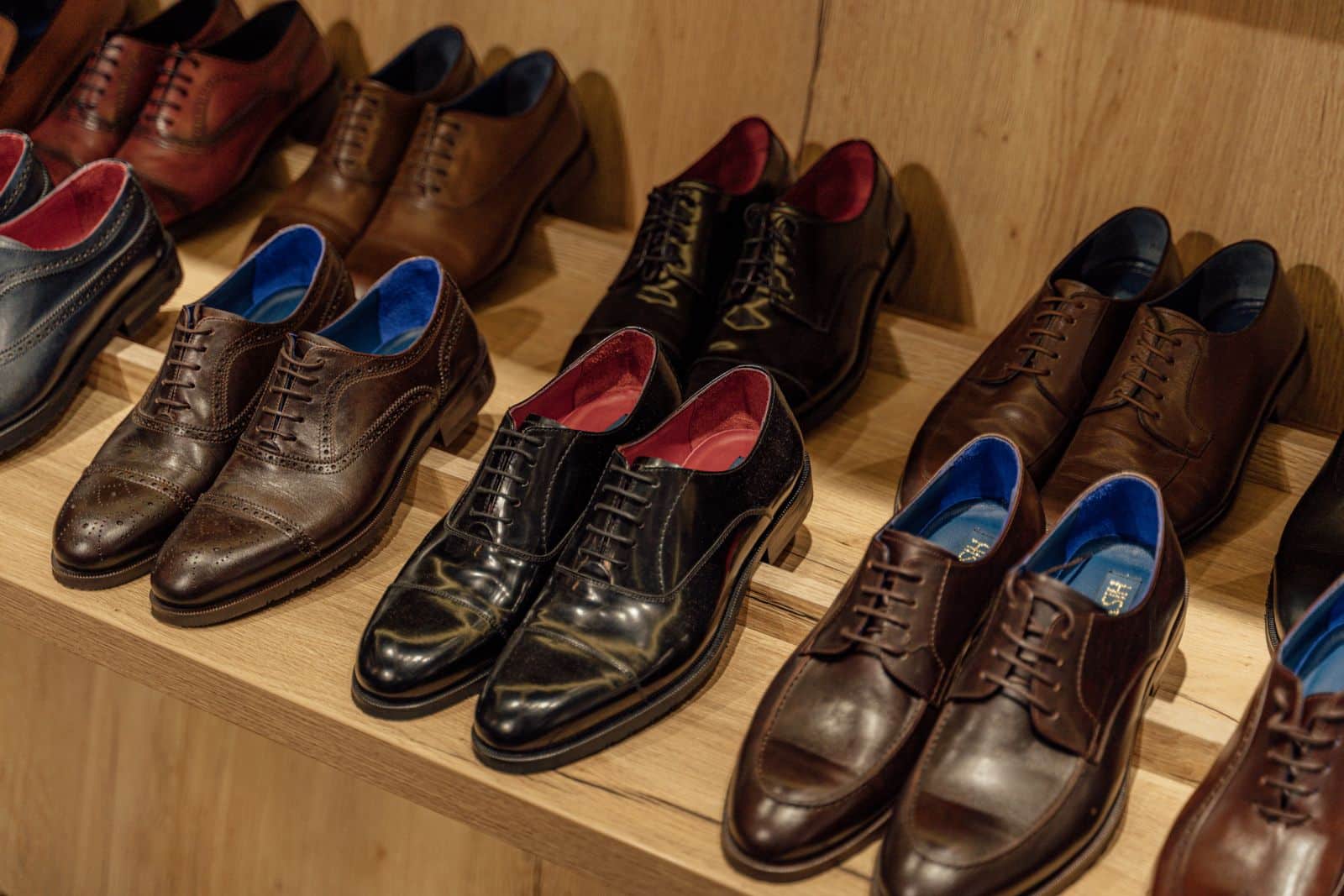
An oxford has closed lacing: the eyelet tabs are stitched under the front of the shoe, which gives it a sleek profile. That’s why it’s the standard for suits and formal events. A plain-toe or cap-toe oxford in black or dark brown, in smooth calf leather, is the safest single choice for interviews, funerals, weddings and business meetings.
- Black is the most formal and the default for evening events and conservative offices.
- Dark brown is more versatile and works with navy, gray and even chinos, but reads slightly less formal.
- Skip heavy broguing, contrast soles and sharply pointed toes on this pair. They narrow where it can go.
If you already know your dress codes lean formal, choose black. If you rarely wear a suit, dark brown will get more use. For help reading invitations and office norms, see our guide to dressing for the room.
Pair two: the brown derby, loafer or chukka
The middle pair does the most work. It should look right with chinos, flannel trousers, dark jeans and a sport coat, and be presentable enough for a business-casual office or a nice dinner. Three styles fill this slot well:
- Derby: open lacing, a slightly roomier fit and a more relaxed look than an oxford. Good for wider feet.
- Penny loafer: no laces, easy on and off, and comfortable in warm weather. Pick a plain leather or suede version without hardware.
- Chukka boot: ankle height with two or three eyelets. A good choice if you live somewhere with cold or wet winters.
Medium-to-dark brown leather or brown suede is the sweet spot here. Suede is surprisingly practical once it’s treated with a protector spray, and it softens the look of tailored clothes.
Pair three: the minimal leather sneaker
The casual pair should be clean and simple: a low-top in white, off-white or navy leather, with little or no visible branding and a stitched (rather than only glued) sole if you can find one. It goes with jeans, chinos, shorts and casual travel outfits, and it won’t look dated in five years the way a loud seasonal design will. Our guide to sneakers that won’t embarrass you in a decade covers the details.
How the three compare
| Pair | Formality | Wear it with | Avoid with |
|---|---|---|---|
| Dark leather oxford | High | Suits, dress trousers, formal events | Shorts, casual jeans |
| Brown derby, loafer or chukka | Medium | Chinos, flannels, dark jeans, sport coats | Black-tie events |
| Minimal leather sneaker | Low | Jeans, chinos, shorts, travel | Suits in formal settings |
What to look for when you buy
With only three pairs, each one gets worn a lot, so construction matters more than the logo.
Leather quality
Full-grain leather keeps the natural surface of the hide and ages into a richer color. Corrected-grain leather is sanded and coated to hide flaws, which often looks plasticky and creases badly. Bend the shoe gently at the toe: fine, shallow creases are a good sign; deep cracks in the finish are not.
Sole construction
A welted shoe (Goodyear or Blake stitched) can be resoled several times, which can stretch its life to many years. A shoe with a glued sole is usually finished when the sole wears through. We explain the differences in why Goodyear welting justifies the price.
Fit
Shop in the afternoon, when feet are slightly larger, and wear the socks you’ll wear with the shoes. Your heel should not slip much, your toes should have room to move, and the widest part of your foot should sit at the widest part of the shoe. Don’t count on a tight shoe stretching dramatically; leather gives a little, not a size.

Make them last
- Rotate. Give each leather pair a day off between wears so the lining can dry out.
- Use cedar shoe trees. They absorb moisture and hold the shape, which reduces deep creasing.
- Clean and condition. Wipe off dirt after wear, and condition smooth leather every few months.
- Find a cobbler early. Replacing heels and soles before they wear into the welt is cheaper than fixing damage. See the cobbler as a lifelong ally.
From experience: When people ask me where it’s worth spending more, my answer is short: a good watch, a good pair of shoes and tailored shirts. Branded T-shirts are where I’d save. Good shoes earn their price because you wear them constantly and, with care and resoling, they keep going.
From experience: The most common mistake I’ve seen over more than 20 years of helping people find quality clothing is buying what’s hip. Shoes are no exception. A plain oxford in good leather still looks right long after this year’s statement sneaker has dated.
When to add a fourth pair
Three pairs cover most lives, but a fourth makes sense if your climate or routine demands it: a waterproof boot for snow and heavy rain, a dedicated pair of running or training shoes, or patent leather shoes if you attend black-tie events often. Add these for function, not for variety.
Key takeaways
- Cover the range: one formal pair, one smart-casual pair, one casual pair.
- Stick to dark brown, black and white in plain designs so everything matches.
- Prioritize full-grain leather and resoleable construction over brand names.
- Rotate, use shoe trees and see a cobbler before soles wear through.
FAQ
Should my formal pair be black or brown?
Black if you attend formal events or work in a conservative office; dark brown if you mostly dress business casual. Dark brown works with more of a typical wardrobe.
Can sneakers replace my middle pair?
Not if your work or social life includes business-casual settings. A clean leather sneaker is great casually, but a loafer or derby looks more appropriate with a sport coat and at nicer dinners.
How long should good shoes last?
It depends on how often you wear them and how you care for them. Welted shoes that are rotated, kept on shoe trees and resoled when needed can last many years, far longer than glued shoes worn every day.
Updated November 2026. Some links on this site may be affiliate links; see our editorial policy.